
Things to Do in Historic Amboise: From the Royal Château to a Loire Valley Wine Break
Things to do in historic Amboise, France — the royal château, Leonardo da Vinci’s final home at Clos Lucé, market shopping, and a Loire Valley wine tasting.
Honfleur was not on the itinerary. Not really. We had a rental car out of Paris, an anniversary surprise waiting the next morning — a WWII jeep tour of the D-Day beaches — and a two-week route already mapped through Mont Saint-Michel and on to the châteaux of the Loire Valley. Honfleur was a rest stop. A place to stretch our legs before the real destinations.
We didn’t leave until the next morning.
Honfleur sits at the mouth of the Seine estuary in Normandy, where the river meets the English Channel. Its Vieux Bassin — a working harbor since the Middle Ages — is lined with tall, slate-covered houses that have drawn painters for centuries, including Honfleur-born Eugène Boudin, who mentored a young Claude Monet along these same docks. It’s a small town, easy to see in a day, but the kind of place that tends to change your plans anyway.
Honfluer At A Glance | |
|---|---|
| Location | Northwestern France, along the Seine Estuary near the English Channel |
| Region | Normandy, in the Calvados department |
| Population | Approximately 6,640 residents |
| Nearest train station | Pont-l’Évêque; Trouville–Deauville and Le Havre are also convenient arrival options |
| Known for | The Vieux Bassin, timber-framed buildings, maritime history, Impressionist art, seafood, and picturesque harbor views |
| Time needed | One full day for the highlights; two days for a more relaxed visit |
Popular Tours in Honfleur, France
Honfleur’s streets don’t reveal themselves all at once. I mapped a route to find what most people miss — past the Vieux Bassin, into the wooden ribs of the Church of St. Catherine, up to Chapelle Notre-Dame-de-Grâce for the view over the estuary, through lanes quiet enough that half the town seemed to have forgotten them. Follow it exactly, or just let it point you in the right direction. Getting a little lost here is the whole idea.
Click here for directions to Honfleur on Google Maps and explore the charming harbor town in Normandy, France.
Honfleur developed as a fortified port town through the Middle Ages, playing a key role in trade and defense along the Seine estuary during the Hundred Years’ War.
In the early 17th century, Honfleur’s harbor was a launching point for exploration and colonization. Samuel de Champlain departed from here on voyages that led to the founding of the French colony of Quebec in Canada.
In the 19th century, Honfleur-born painter Eugène Boudin pioneered plein-air painting along the harbor, mentoring a young Claude Monet. Painters including Monet, Boudin, and Johan Barthold Jongkind gathered here, painting the same shifting harbor light that still draws visitors today.
Built by local shipbuilders in the 15th century, the church’s twin naves were constructed using the same techniques used to build ships — its interior looks, deliberately, like the hull of a ship turned upside down.
Despite being one of Normandy’s most-visited towns, Honfleur was never connected to the national rail network. Visitors arrive by bus, car, or boat — more on exactly how to do that below.
Honfleur is built around the Vieux Bassin, and everything about the town argues against rushing it. You could circle the harbor, duck into the wooden ribs of Sainte-Catherine Church, and call it seen in an hour. Don’t. Linger instead — a glass of wine by the water, a long lunch of whatever came off the boats that morning, the light doing something different every twenty minutes across the harbor. That’s what we did. Years later, it’s still the place I measure other places against.
Top any list of things to do in Honfleur with this one: the Vieux Bassin does not announce itself. There’s no grand entrance, no sweeping view from a distance — you round a corner in Honfleur’s old town and it’s simply there, boats bobbing at anchor, tall narrow houses leaning shoulder to shoulder around the water. I live near Dana Point Harbor, where the boats are enormous, white, and gleaming, engineered for speed and Instagram. These were fishing boats. Small, wooden, patient. It was the difference between a harbor built to impress and a harbor built to work — and somehow the second one was the one that stopped us cold.
•A working harbor since the Middle Ages, framed by the Lieutenance, a 17th-century building that once housed the King’s Lieutenant
•Buildings along the harbor date primarily from the 16th and 17th centuries
•Best photographed in early morning or early evening light, when the harbor is quieter and the reflections are strongest
It won’t top most lists of things to do in Honfleur, but you’ll walk past it whether you plan to or not: the Lieutenance sits at the mouth of the Vieux Bassin doing a job it hasn’t had in centuries, and doing it anyway out of habit. Built in the 1600s to house the King’s Lieutenant — Honfleur’s local representative of royal authority — it once controlled who came and went from one of Normandy’s busiest ports. These days what comes and goes is mostly tourists with cameras, and the Lieutenance lets them through without complaint.
•Built in the 17th century to house the King’s Lieutenant, the crown’s representative overseeing the port
•One of the last surviving pieces of Honfleur’s medieval fortifications, most of which were torn down to build the Vieux Bassin itself
•Marks the historic entrance to the old port, right where the harbor meets the estuary
•Its silhouette — turret, timber, and stone — is one of the first things visitors see arriving at the Vieux Bassin, framing the whole harbor before you’ve even reached it
If there’s one non-negotiable on any list of things to do in Honfleur, it’s this: you’ve probably already seen Quai Sainte-Catherine before you ever set foot in town — it’s the view that shows up on nearly every postcard, guidebook cover, and Instagram feed tagged with Honfleur’s name. A row of tall, narrow houses runs along the Vieux Bassin, slate-faced and faintly crooked, stacked four and five stories high on plots barely wide enough for a single room, all of it doubling itself in reflection on the water. It’s the reason painters kept coming back here for two centuries, and it’s still the first thing that stops most visitors mid-step.
•It’s the single most photographed stretch of Honfleur, and for good reason — the reflections, the color, the tilt of the buildings all read exactly like the paintings this town inspired
•Ground floors along the quay hold most of the harbor’s best restaurants and cafés, making it as good a place to sit down as it is to photograph
•Around 40 houses dating mainly from the 16th to 18th centuries line the quay, protected as historic monuments since 1933
•Famously narrow and tall — some just a few meters wide but four to five stories high, a quirk of how harbor front land was taxed
•Some houses predate the harbor itself, folded in when the town tore down its own fortifications in the 17th century to build the Vieux Bassin
One of the more interesting things to do in Honfleur is a visit to Église Saint-Étienne, the town’s oldest church — and one that has spent surprisingly little of its life being a church. Built in stone in the 14th century — the wood was saved for Sainte-Catherine, up the street — it was deconsecrated after the Revolution and pressed into service as whatever the town needed next: a rope warehouse, a theater, a customs depot, a commodities exchange. It didn’t become the Musée de la Marine until 1897, and even now it feels less like a sacred space than a very old building that finally settled down.
•The oldest religious building in Honfleur, construction dating to the 14th century with additions through the 16th
•Stone, not timber — the one major church in town that didn’t come from the shipwrights’ playbook
•A century of repurposing after the Revolution: rope store, theater, customs warehouse, commercial exchange, in roughly that order, before the Musée de la Marine finally made it permanent in 1897
•Ship models and maritime artifacts inside, documenting Honfleur’s harbor life from the 18th and 19th centuries
•Open Tuesday through Sunday, roughly 10am–12pm and 2pm–6pm; a few euros to get in, free under 15
Ask around the Vieux Bassin about this corner bistro and you’ll hear the same story before you hear the menu: painted blue after the war with whatever leftover paint the town could spare, once a soup kitchen, later a favorite of the artists who kept finding their way back to Honfleur. The stone shows through these days instead of that original blue, but everything the color used to stand for — the corner, the community, the view — is still fully intact.
•Located at 17 Quai Saint-Étienne, right on the corner of the Vieux Bassin
•A postwar landmark, originally painted blue with donated leftover paint; once a soup kitchen and gathering spot for Honfleur’s returning artists
•A century of repurposing after the Revolution: rope store, theater, customs warehouse, commercial exchange, in roughly that order, before the Musée de la Marine finally made it permanent in 1897
•Run by the same owners, Sandrine and Franck, for over 30 years — a rare kind of continuity on a harbor that’s seen a lot of turnover
Near the top of any list of things to do in Honfleur, inside the Church of St. Catherine, the ceiling curves overhead in long wooden ribs, and it takes a second before you realize why it feels so unusual for a church: it was built by shipwrights, not stonemasons, in the 15th century, using the same joinery techniques they used on hulls. Flip it upside down and you’d have a boat large enough to cross an ocean. In a sense, that’s exactly what it is.
•Built in the 15th century by local shipbuilders
•The largest wooden church in France
•Twin naves and a separate bell tower, designed to resemble an inverted ship’s hull
•Free to enter; typically open daily during daylight hours (confirm locally, as hours can shift for services and holidays)
•The separate wooden bell tower sits across the small square from the church itself — don’t miss it
Of everything on our list of things to do in Honfleur, I hadn’t expected the Musée Eugène Boudin to be the thing that made the town click into place, but it was. Boudin was born here, and he spent his career painting this exact stretch of sky and water, eventually convincing Monet to paint outdoors instead of in a studio. Standing in front of Boudin’s harbor scenes, then walking back outside into the same harbor, the light hadn’t changed in a hundred and fifty years. Neither had the reason painters kept coming back.
•Founded in 1868 by Alexandre Dubourg and Eugène Boudin
•Holds 92 works by Boudin, along with paintings by Monet, Dufy, Courbet, and other artists connected to Honfleur
•Includes a Normandy ethnography collection alongside the fine art galleries
•Hours: Open daily except Tuesday; roughly 10am–6pm April through September, shorter the rest of the year.
•Entrance fee: Standard rate applies; free for visitors under 16. A combined Pass’ Musées ticket covers this museum plus the Musées of Old Honfleur.
•Time needed: Budget an hour, more if you like to read every placard.
Not every one of the things to do in Honfleur involves the harbor — just off Place Sainte-Catherine, part of the Bartoux gallery group, the Galerie du Dauphin, is a contemporary art gallery that keeps some unexpected company on its walls: the kind of stroll-in-and-suddenly-you’re-looking-at-a-Dalí experience that happens more often in Honfleur than the town’s size would suggest.
•Located at 30 Place Sainte-Catherine, right by the church, part of the Galeries Bartoux group
•Represents contemporary painting, sculpture, and lithography, including names like Salvador Dalí and Pablo Picasso alongside contemporary artists
•Open daily, roughly 10:30am to 8pm (later on Saturdays) — no admission fee, browsing is welcome
For a quieter alternative to the busier things to do in Honfleur, there’s Rue du Puits — the Honfleur most day-trippers never find. A narrow cobblestone lane, half-timbered houses leaning in close enough to touch, the only sound your own footsteps on stone worn smooth by a few hundred years of them. We found it by accident, a few streets back from the harbor crowds, and it did more to explain why painters kept coming back here than the harbor itself did.
•One of Honfleur’s quieter residential lanes, just off the main tourist paths near the old town
•Classic Norman half-timbering — the dark oak frame and pale infill pattern you’ll see repeated across the old town, but with room to breathe here instead of crowding for a harbor view
Honfleur’s buildings tell you what the town was built to survive: damp Norman winters, close-packed streets, and centuries of shipbuilders who knew wood better than stone.
•Half-timbering (colombage) — the dark oak frames and pale plaster infill seen throughout the old town, a Norman building tradition that used timber over stone because it was cheaper, faster, and more forgiving on the region’s damp clay soil
•Slate-clad facades along the harbor — many Vieux Bassin buildings are faced in slate tiles rather than left as bare timber, a technique that helped waterproof the buildings most exposed to wind and rain off the estuary
•Tall, narrow houses — plots along the harbor were taxed by frontage width in the medieval period, which is why so many buildings grew upward instead of outward, some five and six stories on a footprint barely wide enough for a single room
•Wooden church construction — Sainte-Catherine’s shipwright-built frame is the town’s most famous architectural statement, but the same timber-first instinct shows up in smaller ways all over Honfleur, right down to quiet residential lanes like Rue du Puits
•Uneven, leaning facades — a feature, not a flaw of age: buildings were constructed independently by different owners over centuries, so roof lines, window heights, and wall angles rarely match next door to next door
We were up before the town was. My husband and I hit the streets at sunrise, and for a while Honfleur belonged entirely to us — no crowds, no shop shutters up yet, just our own footsteps on cobblestone and the kind of quiet a harbor town never gets once the day starts. We wandered without much of a plan, and the wandering turned into a small hike up the hill above town before we’d really decided to climb anything. The views opened up gradually, then all at once. It’s one of those things to do in Honfleur that never makes the list, mostly because it isn’t a place — it’s a time of day.


Of all the things to do in Honfleur, this is the one most visitors skip. My husband and I found the Chapelle Notre-Dame-de-Grâce almost by accident, on a walk up the hill above town that turned out to be one of the most serene stretches of our whole visit. Built in the early 17th century, it’s been a pilgrimage site for centuries, and after the busier streets below, arriving to sweeping views over the Seine estuary felt like having the whole hillside to ourselves.
•Built in the early 1600s, dedicated to Our Lady of Grace
•Interior filled with ex-votos, model ships, and plaques offered by sailors and fishermen seeking protection at sea
•A genuinely quiet spot to catch your breath if the harbor feels busy — it’s a short uphill walk from the center, worth it for the view alone
Among all the things to do in Honfleur, chocolate-shopping might be the most underrated. Honfleur takes its chocolate as seriously as it takes its harbor views, and it shows in the windows — hand-painted display pieces, trays of pralines and ganaches lined up like jewelry, chocolatiers who’ve spent decades getting a handful of recipes exactly right. This isn’t the kind of chocolate you grab on the way out the door. It’s the kind you slow down for.
My husband made a rule early in the trip and stuck to it the whole way through France: eat what the region actually eats, wherever you are. In Honfleur, that rule was easy to follow and impossible to regret. This is Norman coastal food — cream, cider, apples, and whatever came off the boats that morning — and the harbor restaurants serve it like they’ve had two centuries of practice, because they have.
What to Expect on the Menu:
•Moules marinières — mussels steamed in white wine, shallots, and cream, the closest thing Honfleur has to a house specialty; nearly every harborfront restaurant has its own version
•Fresh seafood generally — this is a working fishing port, and the catch shows up on plates the same day it comes off the boats
•Camembert and Livarot — two of Normandy’s best-known cheeses, both produced nearby, and worth ordering even if you think you already know what Camembert tastes like
•Tarte aux pommes normande — apple tart made rich with local cream and a splash of Calvados
•Cidre and Calvados — Normandy’s apple cider and the apple brandy distilled from it, both worth drinking here rather than saving for a bottle at home
We ate mussels in cream sauce harborside one night, a bottle of white wine perfectly paired, and it turned out to be one of those meals that ends up defining a whole stop on a trip. Order the regional thing. It’s usually regional for a reason.
Honfleur rewards staying, not just visiting — the harbor empties out and quiets down after the day-trippers leave, and mornings belong almost entirely to whoever slept there the night before. Most of the best options are old buildings by definition: this is a town with very little new construction in its historic core, so charm tends to come standard.
•Near the Vieux Bassin — puts you in walking distance of everything, at the cost of being the busiest, priciest area
•A few streets back from the harbor — quieter at night, still a short walk to everything, often better value
•Older buildings with character over modern hotels — Honfleur has very few large chain properties; most lodging is small, historic, and individually run
We chose L’Absinthe Hôtel, a boutique property set in a former 16th-century presbytery just off the harbor — eleven rooms, each different, with the kind of exposed-beam charm that makes staying in feel like part of the trip rather than a break from it.
Reaching the enchanting town of Honfleur, nestled on the Normandy coast, is a delightful journey through some of France’s most scenic landscapes. Here’s how to get there:
The nearest airport is Deauville-Normandie Airport (DOL), just 20 minutes away by car. Alternatively, Paris Charles de Gaulle Airport (CDG), about two hours away, offers a broader range of international flights. From either airport, renting a car through Hertz or Europcar is a convenient option for the drive to Honfleur. Check flight options at Deauville-Normandie Airport or Paris Charles de Gaulle Airport.
There’s no direct route. The standard approach: take a train from Gare Saint-Lazare in Paris to Trouville-Deauville station (several trains run daily), then connect onto a Nomad Car bus into central Honfleur. Combined train-and-bus tickets can be booked together through SNCF Connect. Total journey time is roughly 3 hours.
Buses offer an affordable and scenic route to Honfleur. FlixBus and other operators run services from Paris, stopping at nearby towns like Le Havre or Deauville, from where you can complete your journey by taxi or local bus. Visit FlixBus for route information.
Driving to Honfleur offers the freedom to explore Normandy at your own pace. The town is easily accessible via the A13 motorway from Paris or other major cities. Car rentals are available at airports and train stations through providers like Hertz, Avis, or Europcar. Use the link below to explore rental car pricing and availability by RentalCars.
Honfleur is easy to treat as a full day in itself, but it also sits at a genuinely useful crossroads — close enough to some of Normandy’s biggest draws that it’s worth thinking of as a base, not just a stop.
Paris was where our trip started, rental car and all — Honfleur is roughly 2 to 2.5 hours out via the A13 and A29, an easy first stop heading into Normandy. If you’re starting the same way, here is my guide to 28 Unforgettable Things to Do in Paris
The D-Day Beaches came next for us, about 1 to 1.5 hours by car from Honfleur — jeep tour and all, since that was the whole reason for this trip. Read my full guide D-Day Locations That Belong On Your France Bucket List
Mont Saint-Michel was roughly 2 hours further west from there, and where we spent the following night. See our Mont Saint-Michel guide Why You Need to Visit Mont Saint Michel at Least Once in Your Life.
The Loire Valley was where the trip continued after that, château to château. See our Loire Valley castles guide.
If Honfleur is the stop that convinces you to slow your whole Normandy itinerary down, this is roughly the route it slows down into.
Yes — Honfleur is one of Normandy's most photogenic towns, built around a compact, walkable harbor with centuries of maritime and artistic history. What we planned as a quick stop turned into an overnight stay.
Take a train from Paris (Gare Saint-Lazare) to Trouville-Deauville, then a Nomad Car bus into Honfleur. Combined tickets are bookable through SNCF Connect, and total travel time is roughly 3 hours.
No. Despite being one of Normandy's most-visited towns, Honfleur was never connected to the national rail network — visitors arrive by bus, car, or boat.
Very much so — Honfleur sits close enough to the D-Day beaches to work as an overnight stop the night before or after a tour, which is exactly how we used it.
Two to three hours covers the harbor and church. A full day, or better, an overnight, gets you the museum, the chapel at sunrise, and dinner by the water.
Its historic harbor, the Vieux Bassin; the wooden Church of St. Catherine; and its role in the birth of Impressionism through painter Eugène Boudin, a Honfleur native who mentored Claude Monet.
Norman coastal cooking — moules marinières, fresh seafood, Camembert and Livarot cheese, apple tart made with local cream and Calvados, and the region's cider and Calvados itself.
Early morning, if you can manage it. The harbor and streets are close to empty at sunrise, before day-trip crowds arrive later in the morning.
As of spring 2026, part of the quay was closed to the public after inspectors found structural movement in several historic buildings, affecting some nearby shops and restaurants. Check current status before planning around it.
I’m Lola Zoch, creator of My Storied Journeys—a travel blog rooted in wonder, sustainability, and storytelling. I follow cobblestone paths and coastlines alike, seeking meaning in every mile. From UNESCO marvels to Major League ballparks (20 and counting). My hope? To inspire you to find your journey and pass on a legacy of curiosity and care to the next generation.
Find the best things to do in Mont Saint-Michel
I don’t travel with endless days to wander (maybe someday) — I travel with intention. Every city has a story, and I plan around what matters most, so I leave inspired (and never regretful). In my guides, I share it all: what I loved, what I researched, and what you might choose for your own journey. Think of them as a compass, not a script—so you can create your chapter in that city’s story.
Journey Product Essentials
Some of the links on this page are affiliate links, which means I may earn a commission if you make a purchase—at no extra cost to you. Thank you for supporting My Storied Journeys!

Things to do in historic Amboise, France — the royal château, Leonardo da Vinci’s final home at Clos Lucé, market shopping, and a Loire Valley wine tasting.

A first-hand travel guide to Château de Chenonceau — hours, tickets, the gallery over the Cher, and the women who shaped it, from real visits to the Loire Valley.

Planning a trip to the Loire Valley’s largest château? This Château de Chambord travel guide covers hours, tickets, what to see inside, and tips from real visits.

A first-person road trip itinerary from Paris through Normandy — Honfleur, the D-Day Beaches, and Mont Saint-Michel — ending in the Loire Valley, with driving times, where we stayed, and the rental car lesson we learned the hard way.

Discover 30 of the best things to do in Lille, France, from Old Lille and the Vieille Bourse to museums, markets, Flemish food, and easy day trips.

Visiting the Louvre Museum isn’t about seeing everything—it’s about seeing what matters most to you. This guide shows when to go, how to plan your route, avoid overwhelm, and experience the Louvre with intention, curiosity, and time to wander.

Discover the 4 best day trips from Paris, including the royal grandeur of Versailles, champagne tasting in Épernay, medieval charm in Strasbourg, and the fairytale castles of the Loire Valley. Each destination offers history, beauty, and unforgettable experiences just hours away.

Embark on a breathtaking road trip through Northern France, exploring Paris, Normandy’s beaches, charming Honfleur, the fairytale Mont Saint Michel, and the castle-filled Loire Valley. Discover history, beauty, and unforgettable moments on this scenic French adventure from city to coast.

Explore the grandeur of the Palace of Versailles, where opulent halls and sprawling gardens reveal the lavish lives of French royalty. Discover the history, beauty, and intrigue behind Marie Antoinette’s world in this unforgettable journey through one of France’s most iconic landmarks.

Discover 20 unforgettable things to do in Paris, from sipping champagne atop the Eiffel Tower to exploring Montmartre and hidden gems like the Crypte Archéologique. A first-person travel guide through the City of Light’s beauty, history, and soul.

Travel Narbonne, France, and discover the charm of this historic city in the heart of the Languedoc region. Explore ancient Roman ruins, stroll through vibrant markets, and enjoy the relaxed ambiance along the Canal de la Robine. Our guide reveals Narbonne’s rich history and cultural treasures.

This Château d’Amboise Travel Guide explores the spectacular royal residence rising above the Loire River. Discover Leonardo da Vinci’s tomb, magnificent rooms, historic towers, panoramic gardens and the essential details you need to plan your visit.

Plan an easy Loire Valley day trip from Paris by train and rental car, with exact timing for Château de Chenonceau, Amboise, lunch, and Tours.

Discover the best things to do with kids on a Paris family trip. Explore iconic landmarks like the Eiffel Tower, visit the magical Jardin d’Acclimatation, and enjoy a boat ride on the Seine. Our guide offers fun, family-friendly activities for an unforgettable Paris adventure.
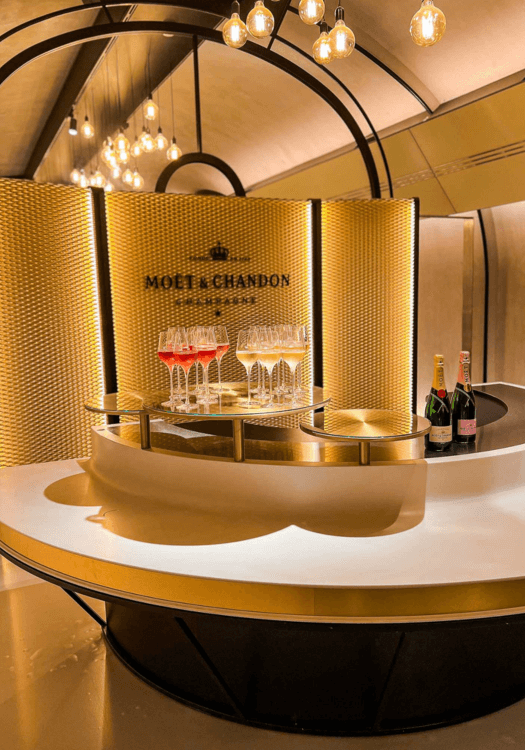
Explore Épernay, France, and indulge in the world of Champagne. Explore the renowned Avenue de Champagne, tour prestigious cellars, and taste exquisite vintages. Our guide highlights the best Champagne experiences, uncovering the rich history and elegance that make Épernay a must-visit destination for wine lovers.

Things to do at the D-Day Beaches in Normandy: Utah Beach and its landing museum, the church at Sainte-Mère-Église where a paratrooper’s effigy still hangs from the steeple, the Richard Winters Leadership Monument, La Fière’s “Iron Mike,” and the German bunkers still standing along the dunes. A full guide with hours, addresses, and a rainy day we won’t forget.

A first-hand Loire Valley travel guide to Chenonceau, Chambord, and Amboise — where to stay, what to see, and lessons learned across two trips through France’s château country.
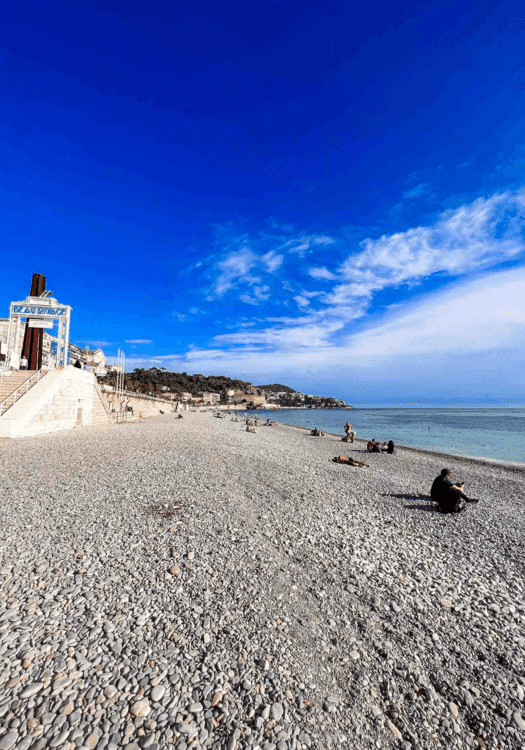
Travel the French Riviera and bask in the sun-soaked glamour of this Mediterranean paradise. Explore charming coastal towns, luxurious beaches, and vibrant markets. Our guide reveals the best of the Riviera’s chic resorts, stunning views, and the perfect blend of relaxation and elegance.
Subscribe to my weekly newsletter. I don’t send any spam email ever!
