
Things to Do in Historic Amboise: From the Royal Château to a Loire Valley Wine Break
Things to do in historic Amboise, France — the royal château, Leonardo da Vinci’s final home at Clos Lucé, market shopping, and a Loire Valley wine tasting.
 Skip to content


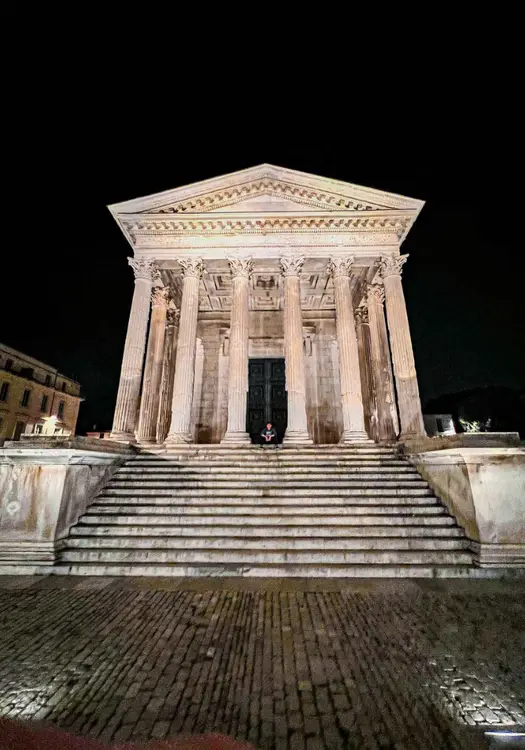
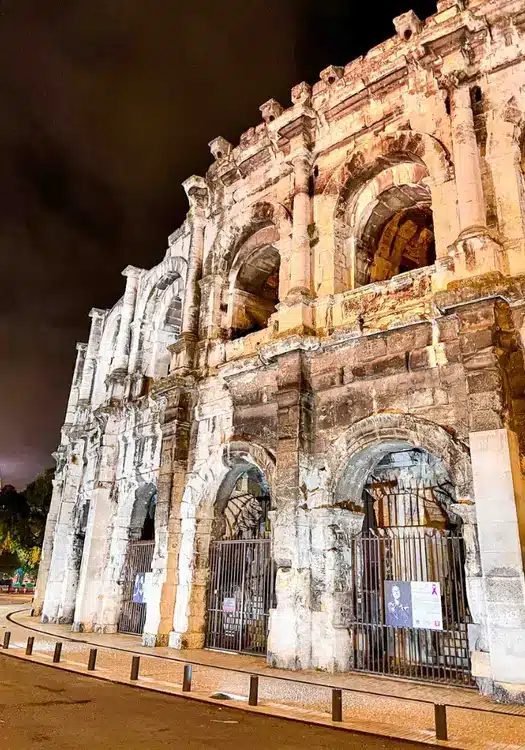
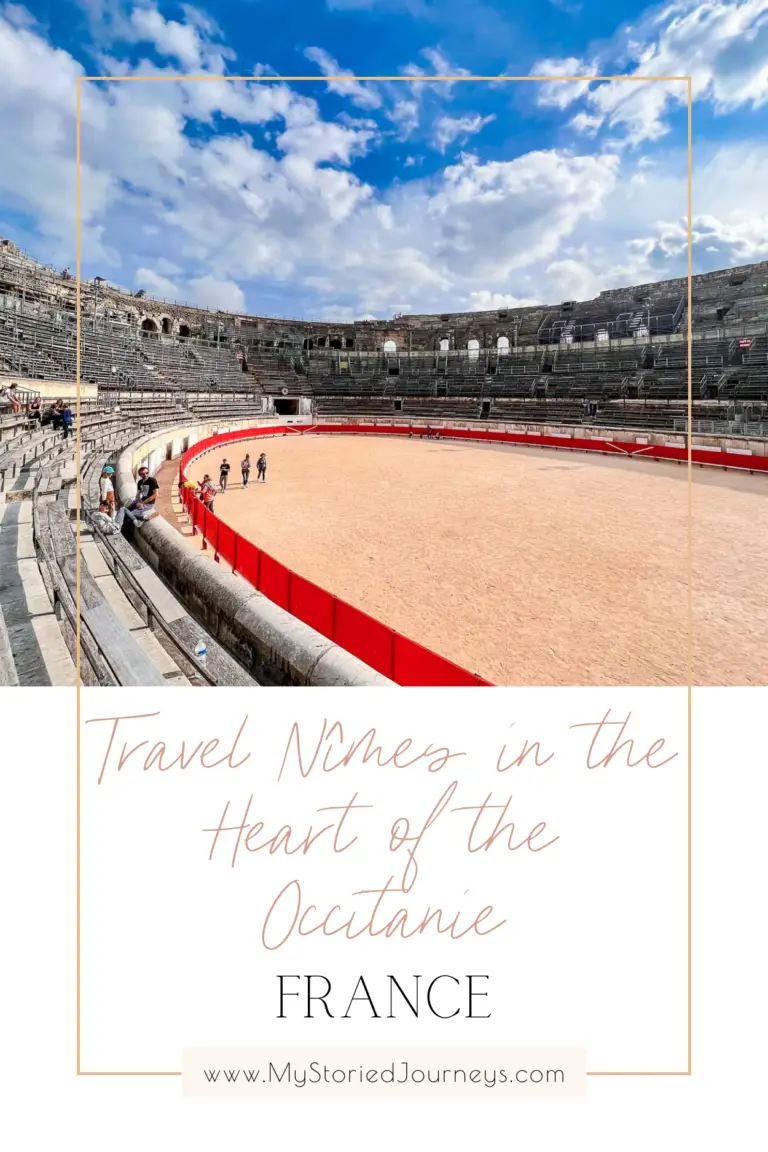


Nîmes, France, often hailed as the “Rome of France,” is a city where history is not just preserved but celebrated at every turn. Located in the sun-kissed Occitanie region of southern France, Nîmes offers visitors a remarkable journey through time, with some of the most well-preserved Roman architecture outside Italy. From the imposing Arena of Nîmes, a nearly 2,000-year-old amphitheater that still hosts events today, to the beautifully intact Maison Carrée, an ancient Roman temple, the city is a living museum of antiquity.
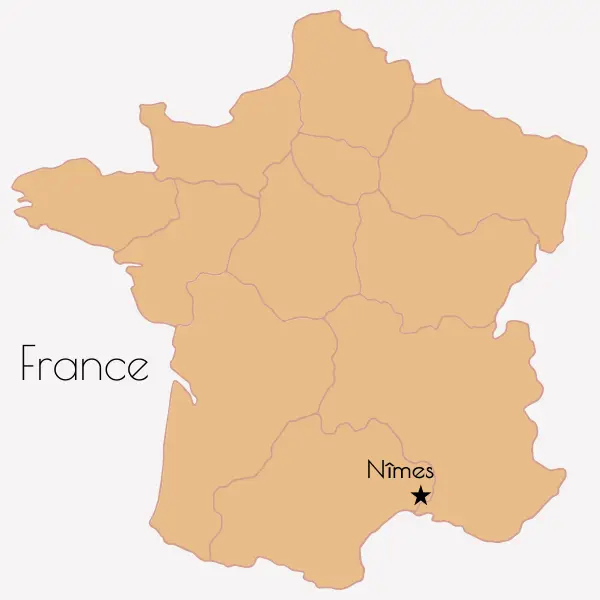
But Nîmes is much more than its ancient ruins. This vibrant city effortlessly blends its storied past with a lively present. Wander through its charming streets, where Roman monuments stand alongside elegant 18th-century buildings, modern boutiques, and bustling cafés.
Nîmes’ appeal extends beyond its historical sites. It is a city that exudes Southern French charm, with warm, sunny days perfect for exploring its lush gardens, like the Jardin de la Fontaine, or enjoying the local Provençal cuisine in a quaint bistro. Just a short drive away, the awe-inspiring Pont du Gard, an ancient Roman aqueduct, stands as a testament to the engineering prowess of the Romans and offers a stunning backdrop for a day trip.


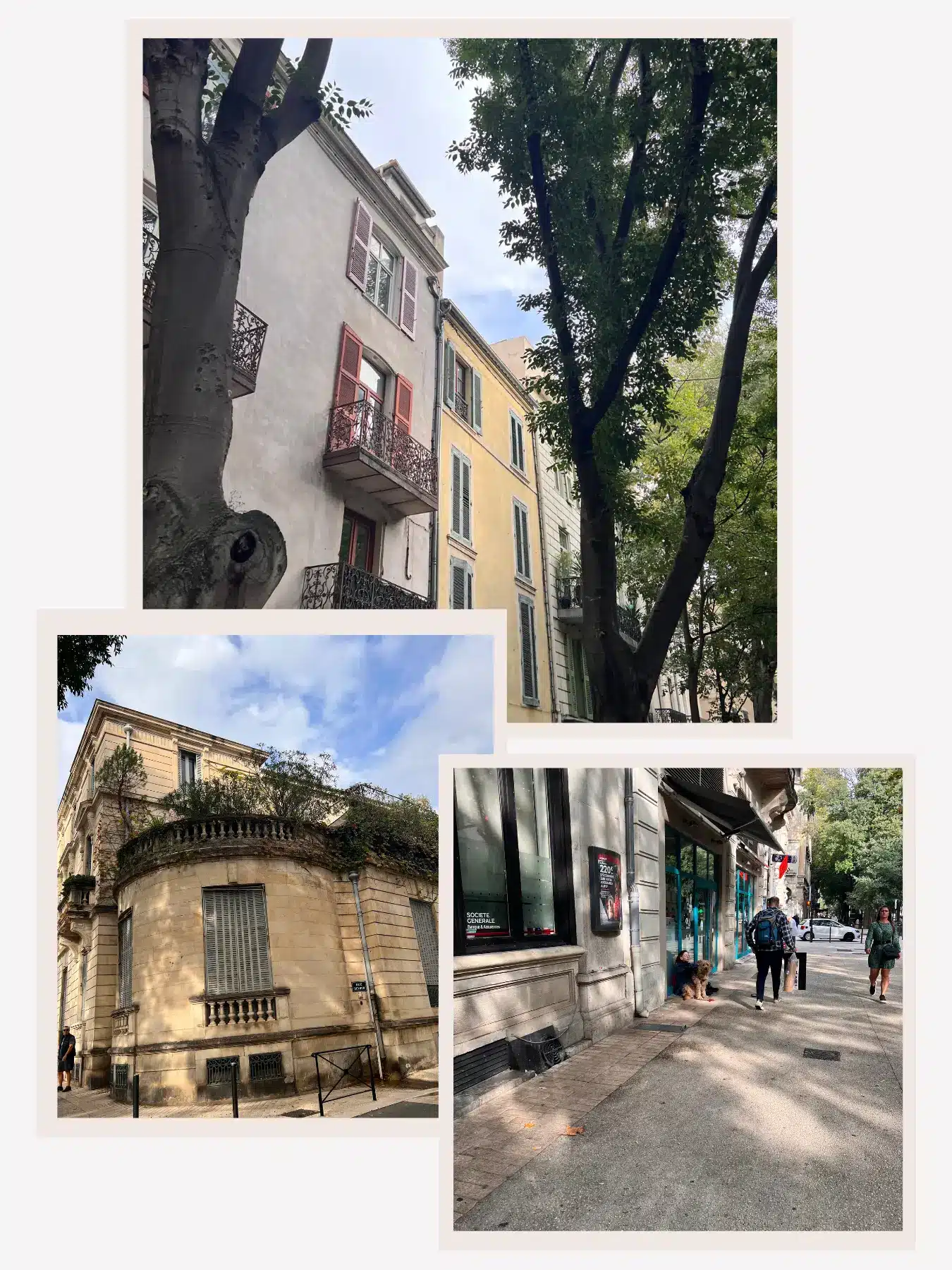 Nîmes is a moderately sized city with a population of around 150,000 people. It covers an area of approximately 62 square miles, making it one of the larger cities in the Occitanie region. The city’s layout reflects its Roman heritage, with a well-organized grid of streets radiating from the historic center. This compactness makes Nîmes an ideal city for walking, allowing visitors to easily explore its many historical sites and modern attractions.
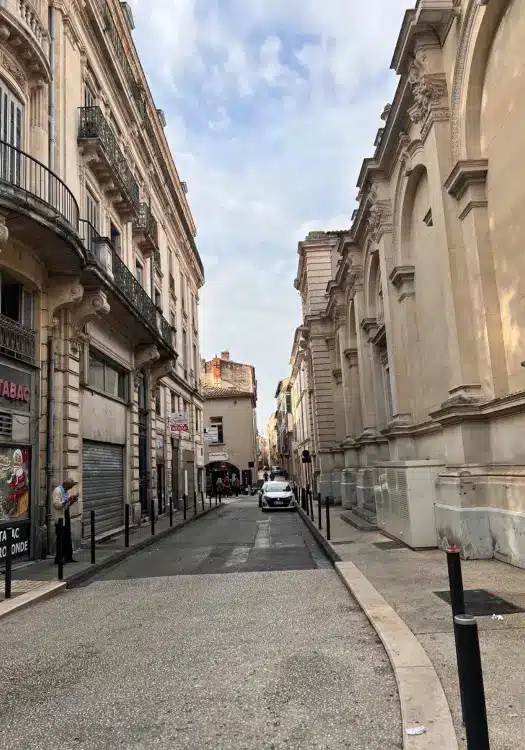
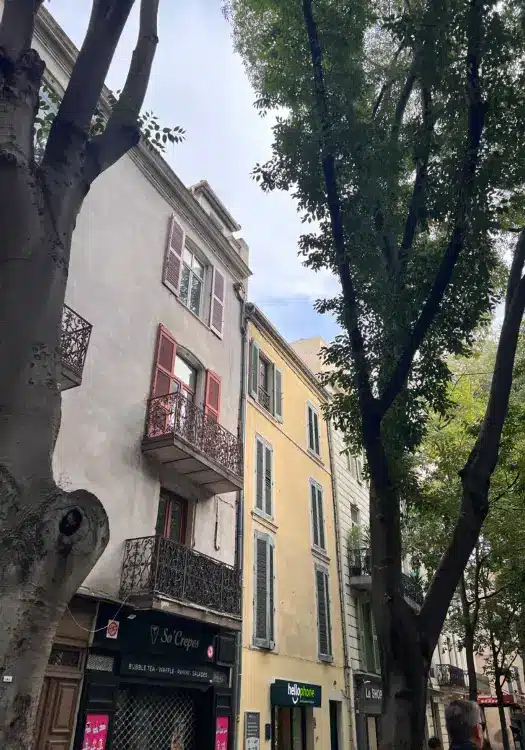
The heart of Nîmes is its old town, where narrow streets are lined with cafes, boutiques, and historic buildings. The city’s rich history is palpable as you wander through its streets, with every corner offering a glimpse into its storied past.
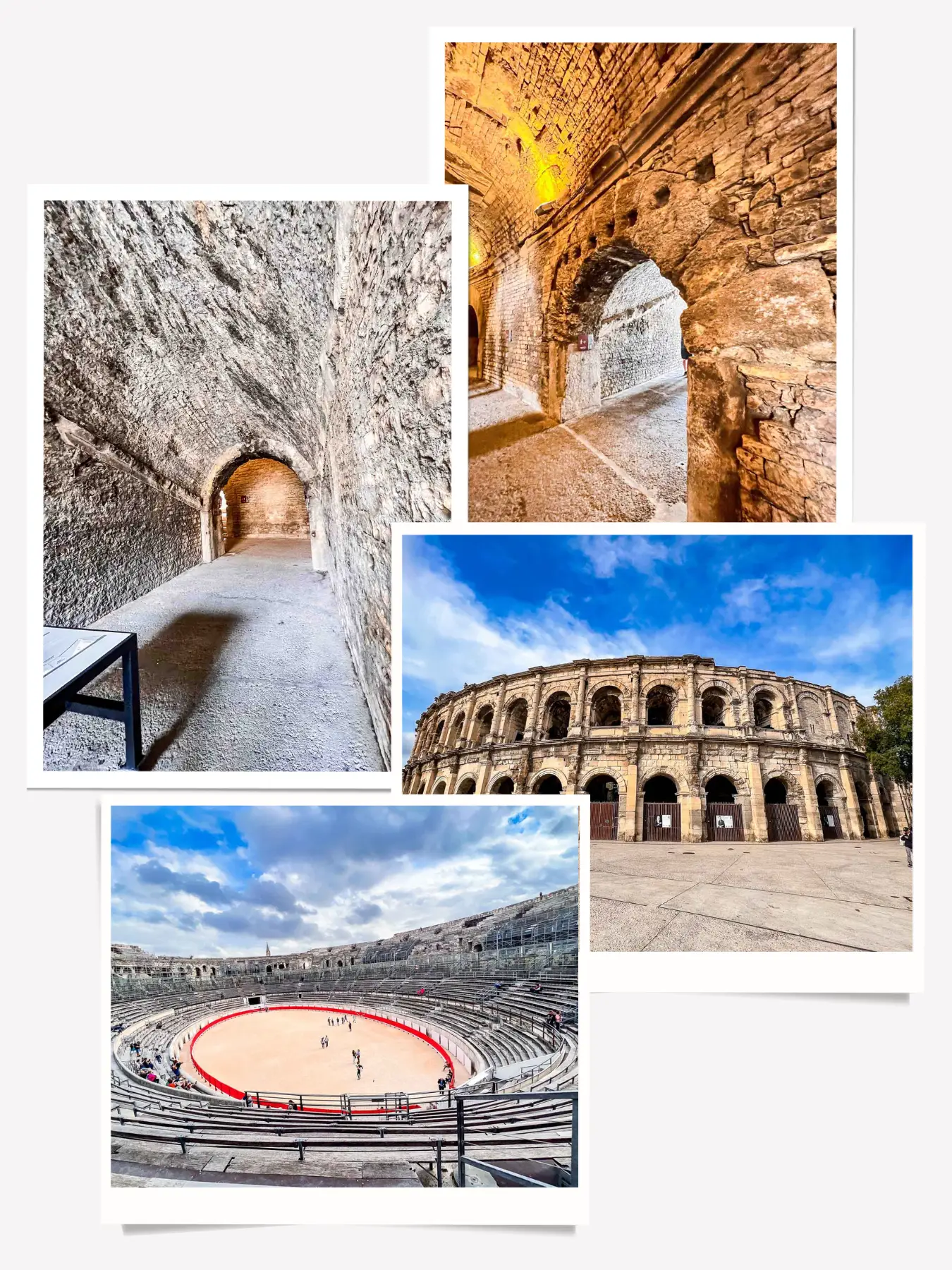 The Arena of Nîmes, or Arènes de Nîmes, is perhaps the most iconic structure in the city. This Roman amphitheater, built in the 1st century CE, is one of the best-preserved amphitheaters in the world. It was originally designed to hold up to 24,000 spectators and was used for gladiatorial games, animal hunts, and public executions. The Arena is an architectural marvel, with its elliptical shape, tiered seating, and intricate stonework.
Today, the Arena remains a central part of Nîmes’ cultural life. It hosts a variety of events throughout the year, including concerts, bullfights, and the famous Feria de Nîmes, a celebration of the city’s bullfighting tradition. Visitors can take guided tours of the Arena to learn about its history, architecture, and the events that took place within its walls.
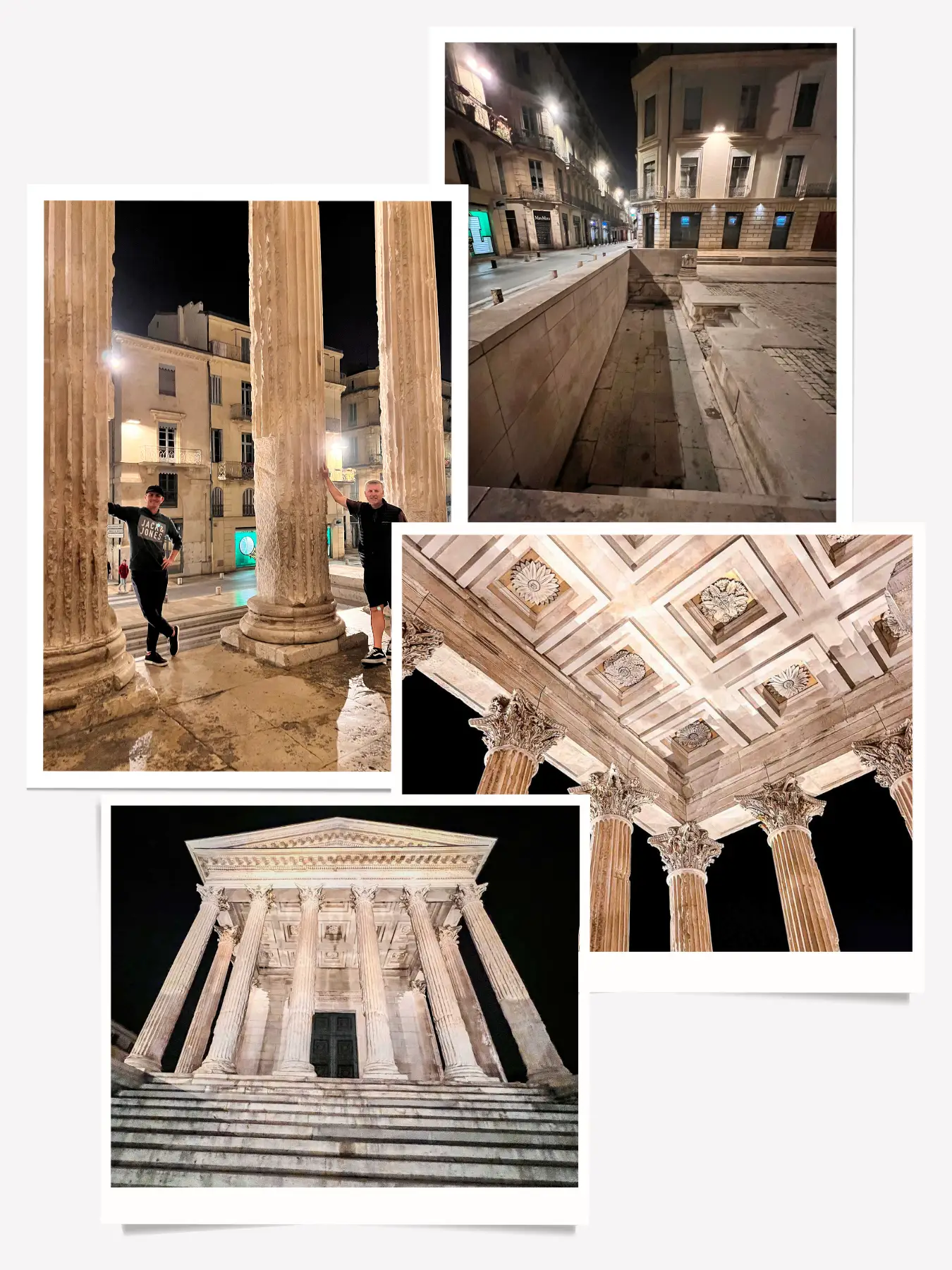
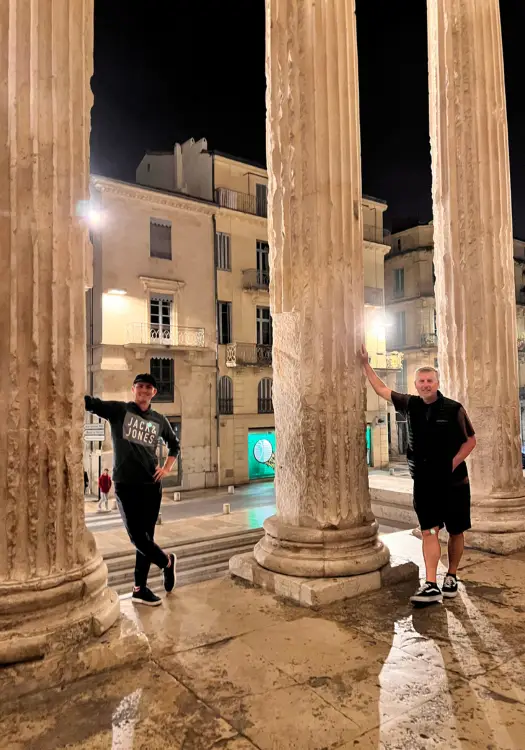
Another must-see Roman site in Nîmes is the Maison Carrée, a stunningly preserved Roman temple. Built in 16 BCE during the reign of Augustus, the Maison Carrée was dedicated to Gaius and Lucius Caesar, the grandsons of the emperor. The temple’s harmonious proportions and elegant Corinthian columns make it a masterpiece of Roman architecture.
The Maison Carrée has served various purposes over the centuries, including as a church, a stable, and a government building. Today, it houses a small museum and occasionally hosts art exhibitions. The temple’s pristine condition is a testament to the skill of its builders and the care taken to preserve it over the millennia.
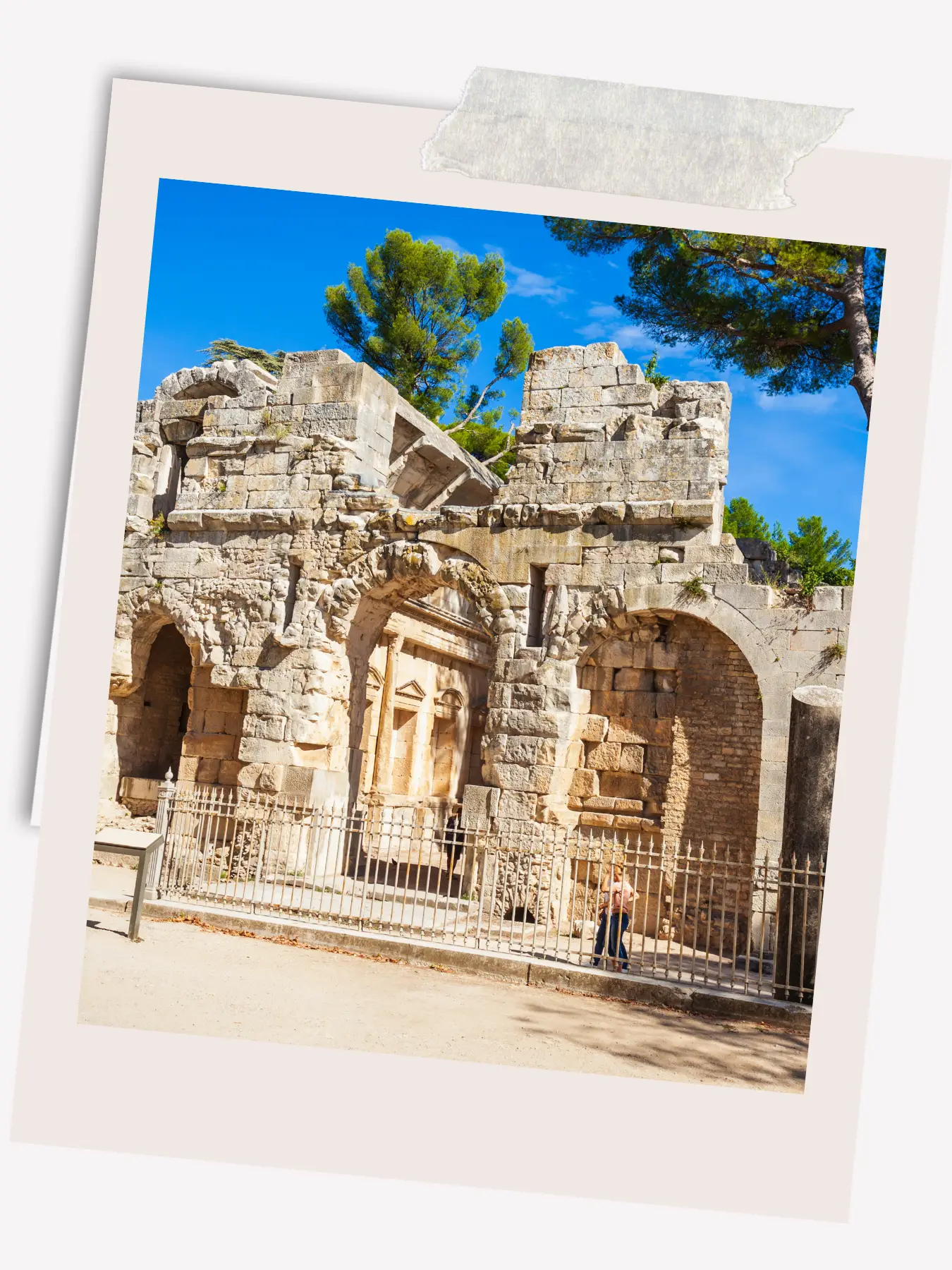 The Temple of Diana is another fascinating Roman ruin in Nîmes. Located within the Jardin de la Fontaine, the temple dates back to the 1st century CE and was part of a larger complex dedicated to the goddess Diana. The temple’s original purpose is somewhat of a mystery, with historians debating whether it was a library, a bathhouse, or a temple.
Despite its partial ruin, the Temple of Diana retains much of its original grandeur, with its arched windows, vaulted ceilings, and intricate stone carvings. The temple is a peaceful spot to explore, offering a quiet retreat from the hustle and bustle of the city.
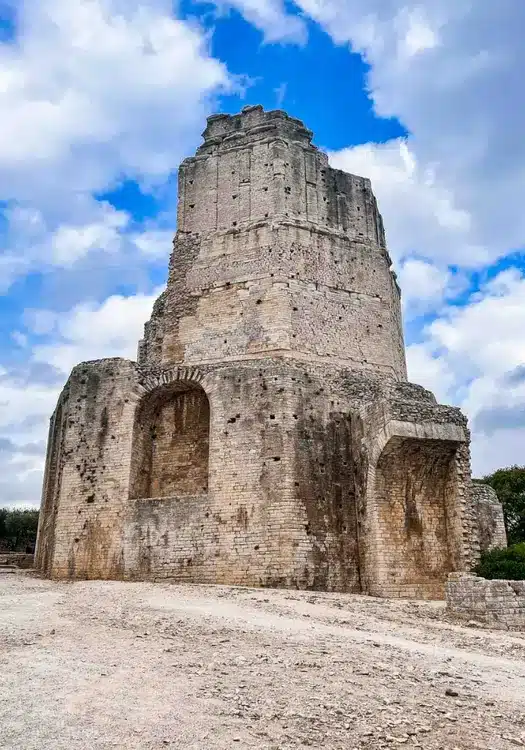
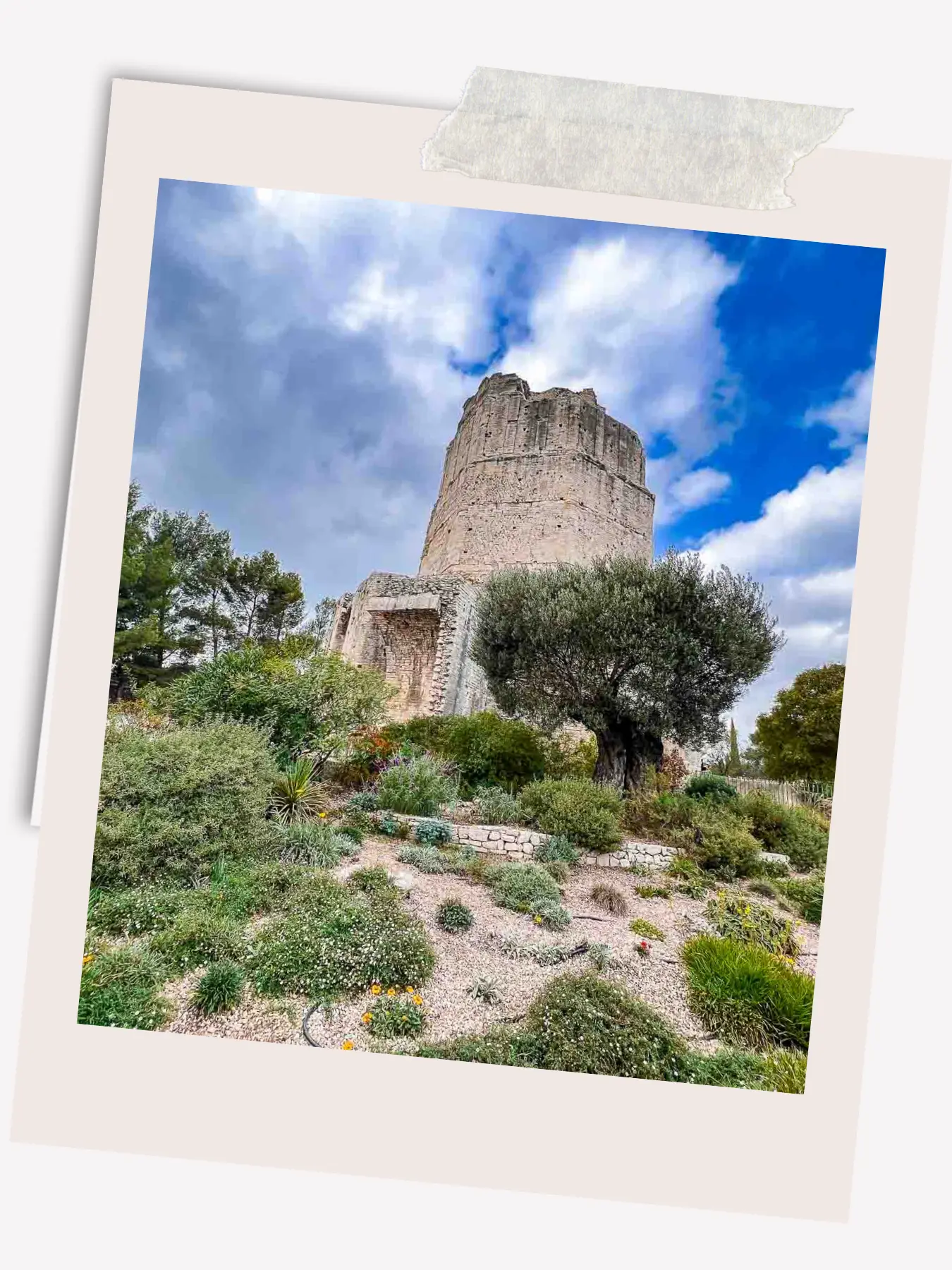 The Tour Magne, or Great Tower, is another remnant of Nîmes’ Roman past. This ancient watchtower stands on Mont Cavalier, the highest point in the city, and offers panoramic views of Nîmes and the surrounding countryside. The tower was originally part of the city’s defensive walls and dates back to the 3rd century BCE, making it one of the oldest structures in Nîmes.
Visitors can climb the Tour Magne for a breathtaking view of the city, taking in the Arena, the Maison Carrée, and the distant peaks of the Cévennes mountains. The tower is also a great place to learn about the history of Nîmes’ fortifications and the city’s strategic importance in Roman times. Click here for directions to Tour Magne.
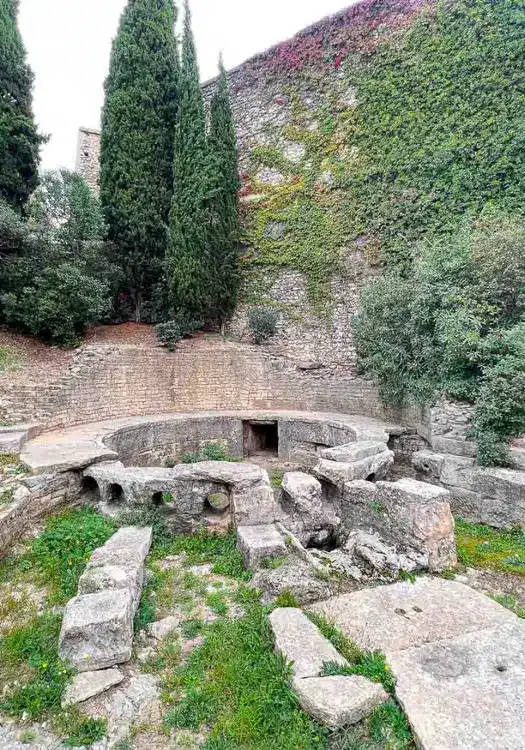
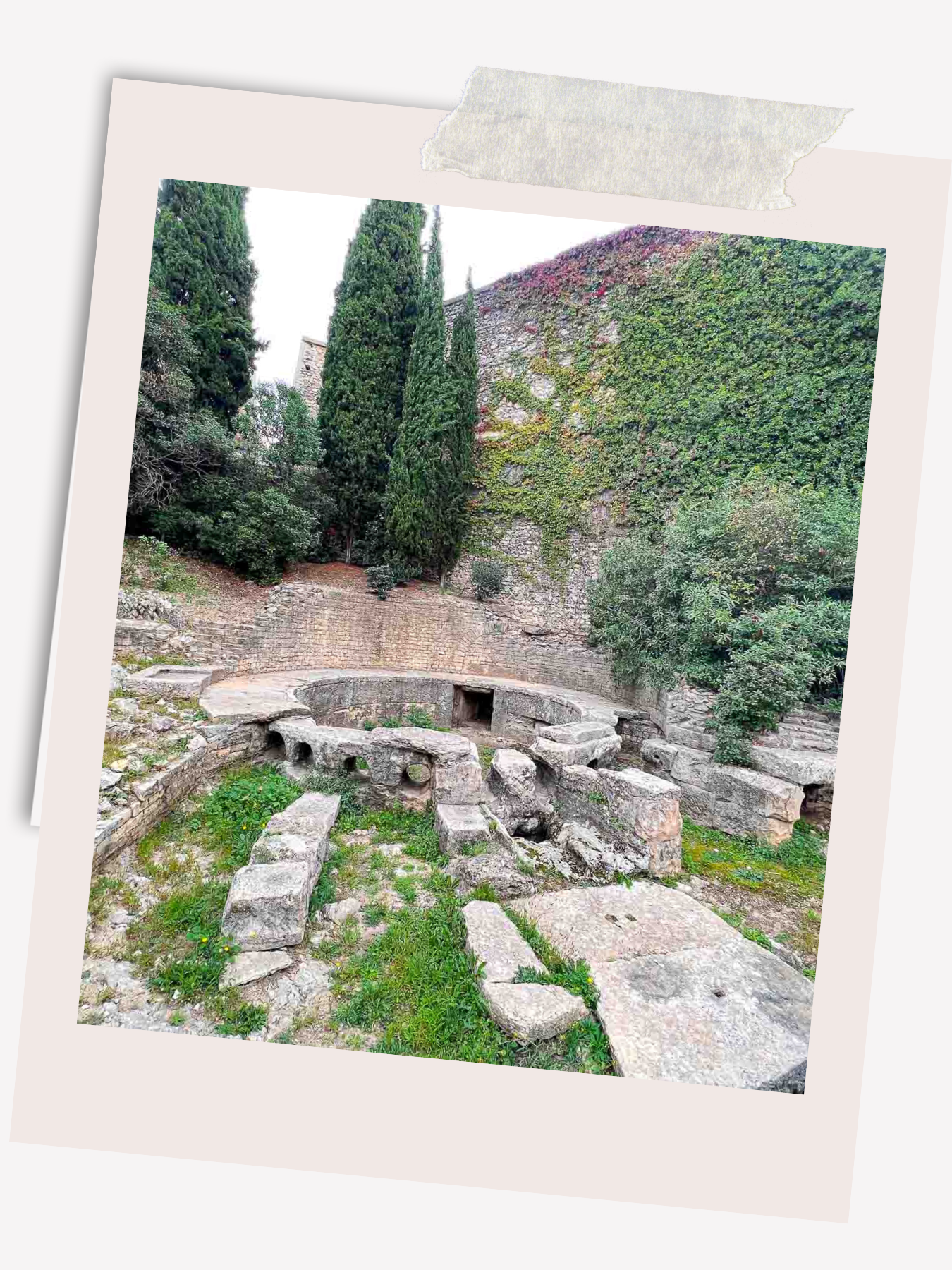 The Castellum Aquae stands as a fascinating relic of engineering ingenuity. This remarkable structure, a testament to Roman innovation, was once a critical hub in the city’s sophisticated water distribution system. Built during the 1st century AD, the Castellum Aquae was the final stop for water transported via the famed Pont du Gard aqueduct.
The Castellum Aquae, a circular stone basin located on Mont Cavalier, was ingeniously designed to distribute water throughout the city’s public baths, fountains, and private homes. Today, it offers a glimpse into the advanced technologies that allowed Roman civilization to thrive.
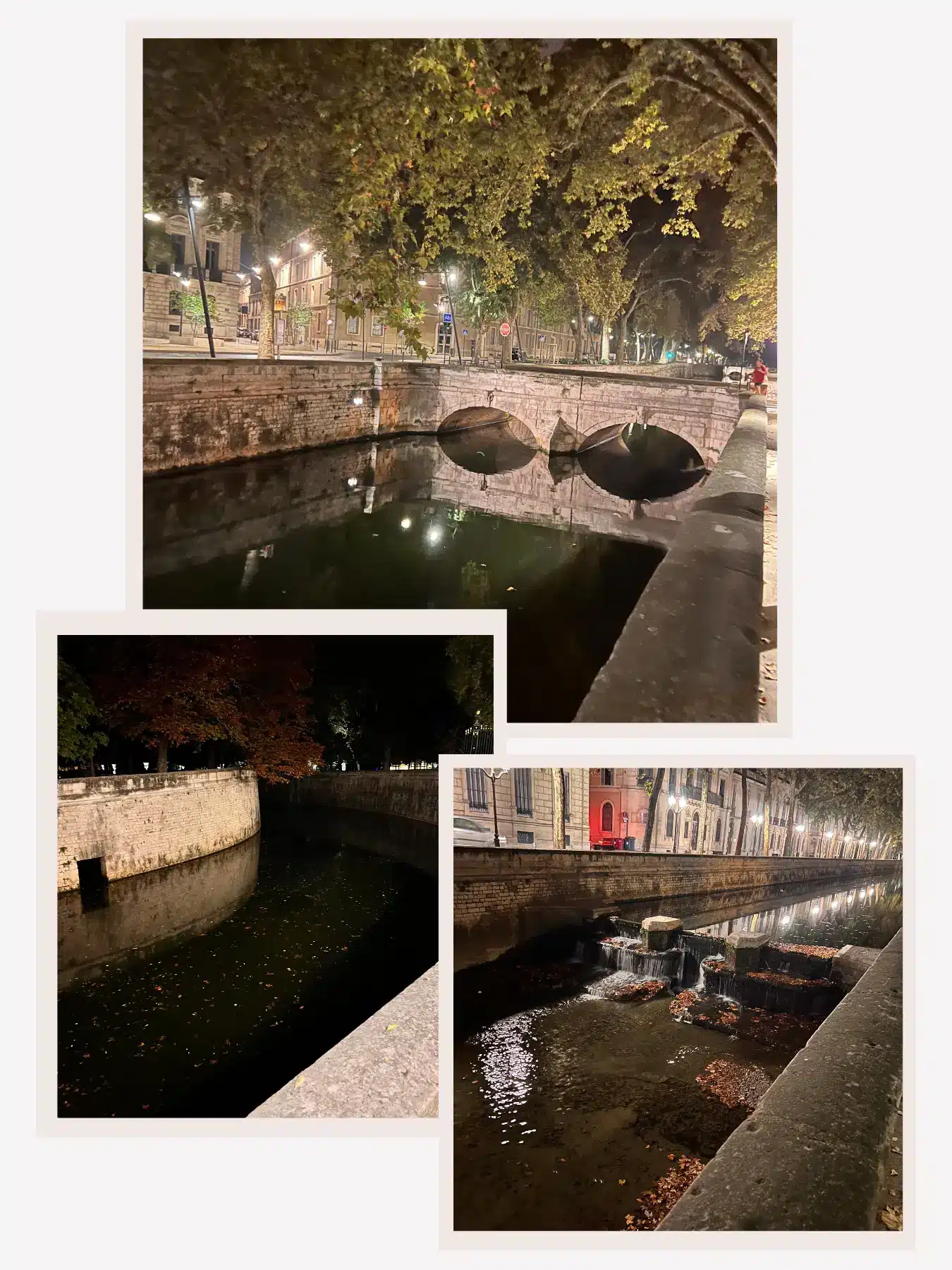
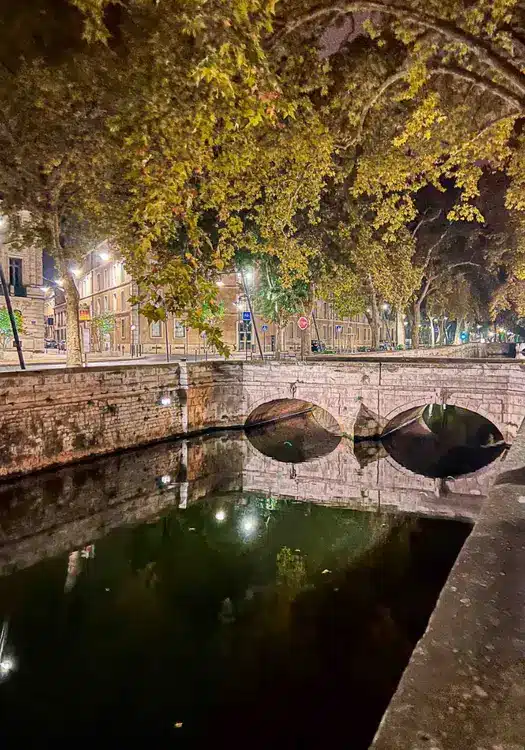
Nestled in the heart of Nîmes, France, the Quais de la Fontaine is a picturesque promenade that effortlessly blends the city’s rich history with its natural beauty. As one of the oldest public gardens in Europe, this charming area dates back to the 18th century and follows the course of the ancient Roman aqueduct that once supplied water to the city.
Lined with elegant plane trees and bordered by classical stone balustrades, the Quais de la Fontaine leads to the Jardin de la Fontaine.
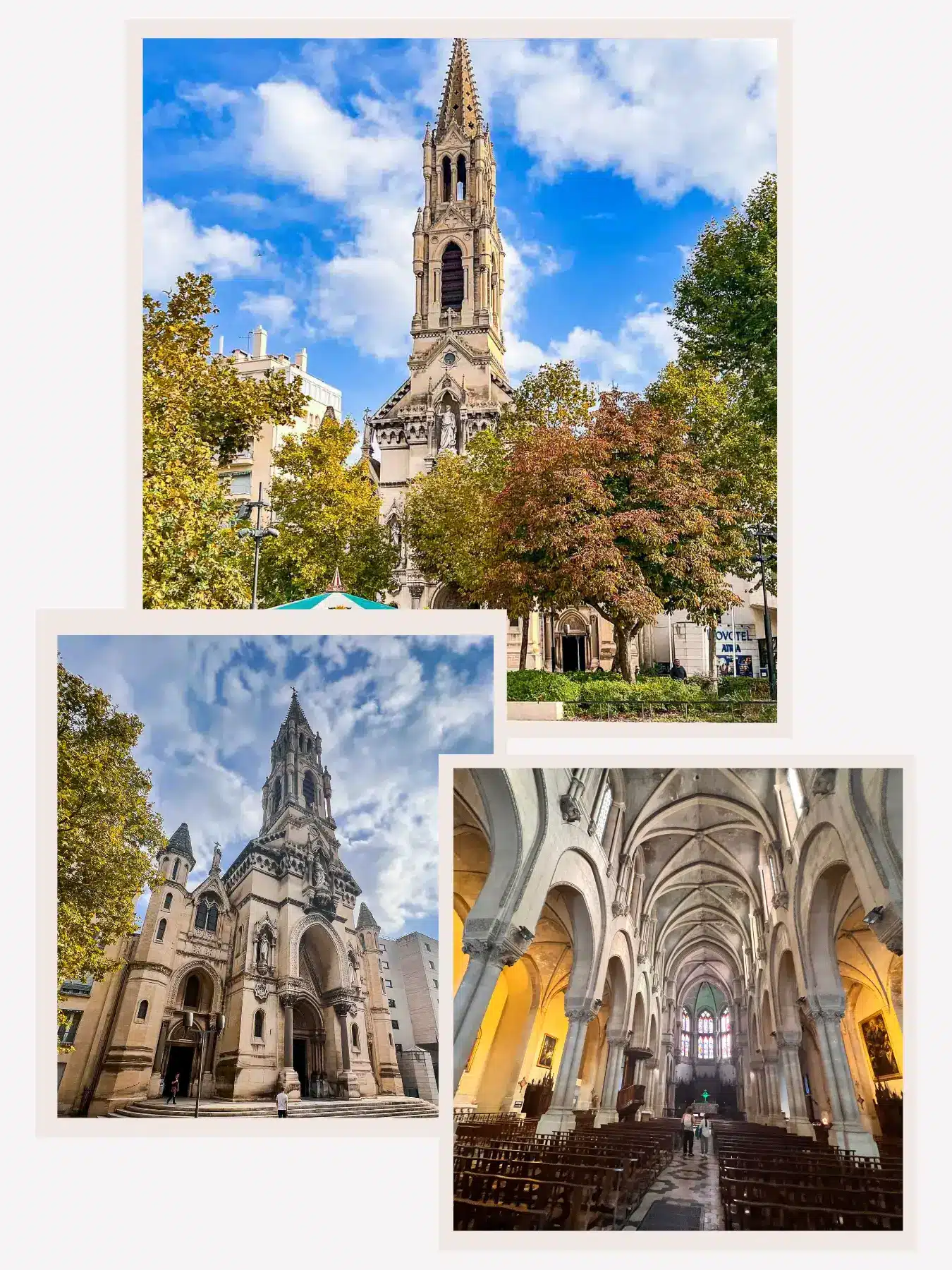
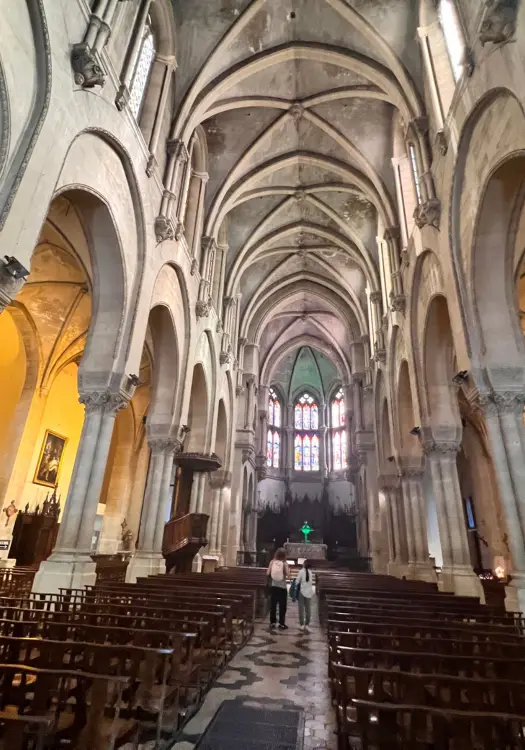
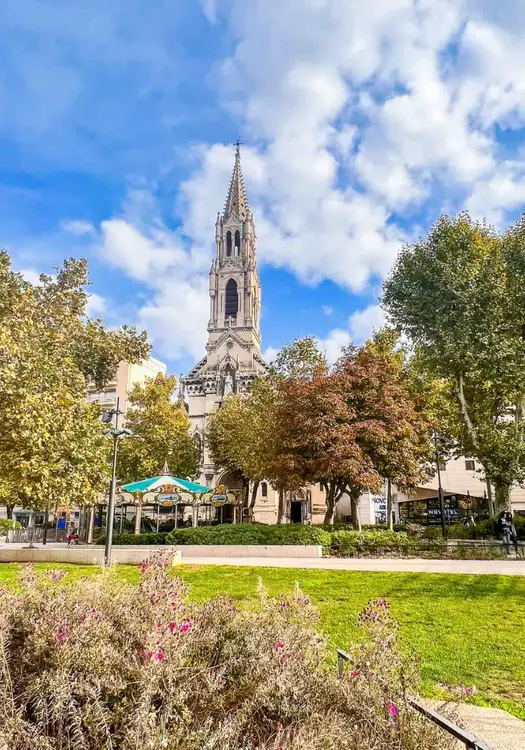
The Church of Sainte Perpétue is dedicated to Sainte Perpétue, a Christian martyr venerated since the early centuries. Saint Perpétue was built in the 1860’s and reflects the Gothic Revival style, with its soaring spires, pointed arches, and intricate stained glass windows that bathe the interior in a kaleidoscope of colors.
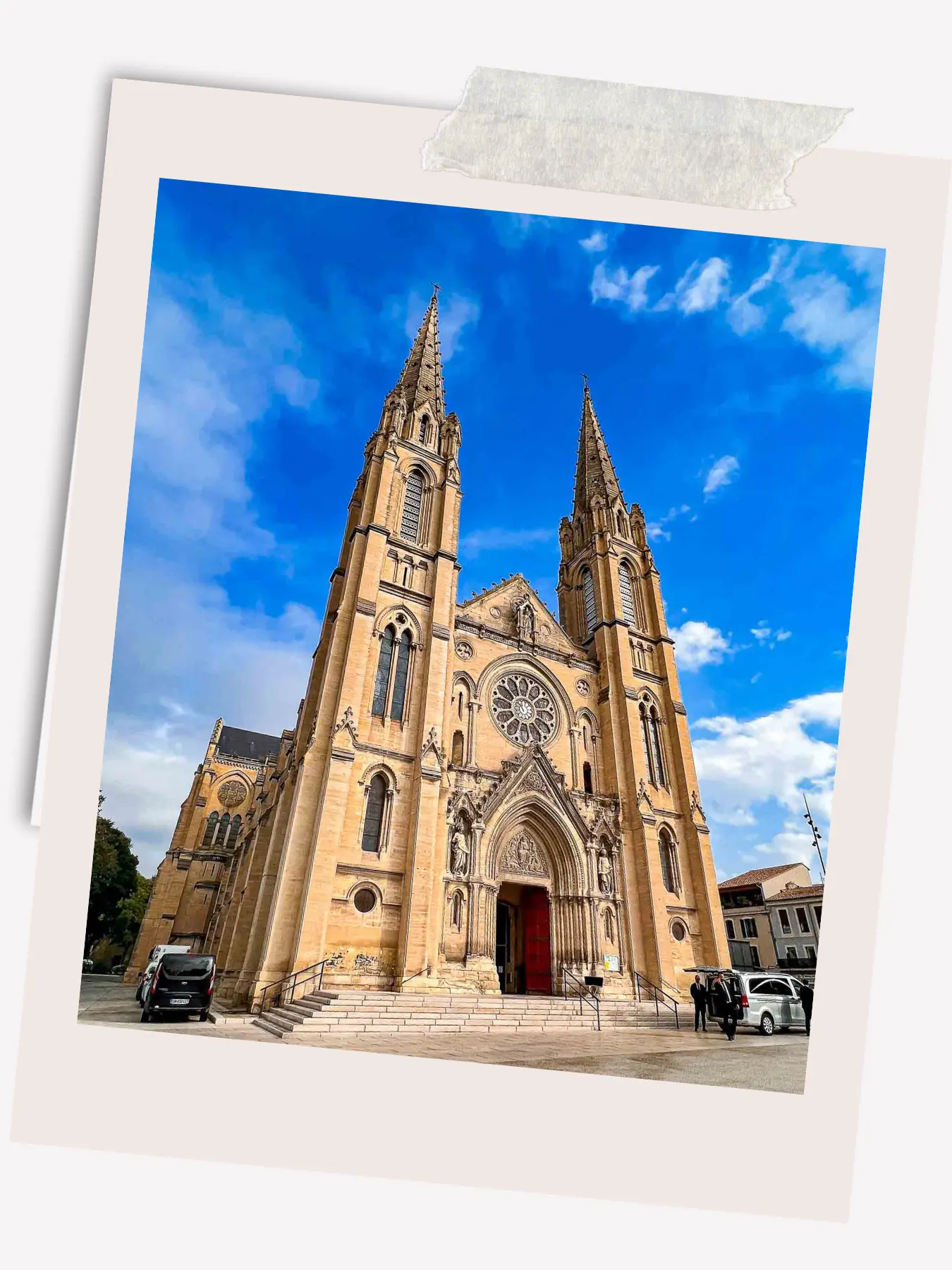 In the heart of Nîmes, France, where Roman ruins often steal the spotlight, lies a hidden gem of Gothic architecture: the Saint Baudilus Church. This magnificent structure, often overlooked by tourists, offers a serene escape into the spiritual and artistic heritage of the region. Named after Saint Baudilus, a Christian martyr venerated in southern France, the church stands as a testament to centuries of faith and architectural evolution.
Built in the 19th century, Saint Baudilus Church showcases the Gothic Revival style, characterized by its pointed arches, intricate stained glass windows, and soaring spires that reach toward the heavens. The church’s interior is equally impressive, with a tranquil ambiance that invites contemplation. The light filtering through the colorful stained glass casts a serene glow over the nave, creating a space where history and spirituality converge.
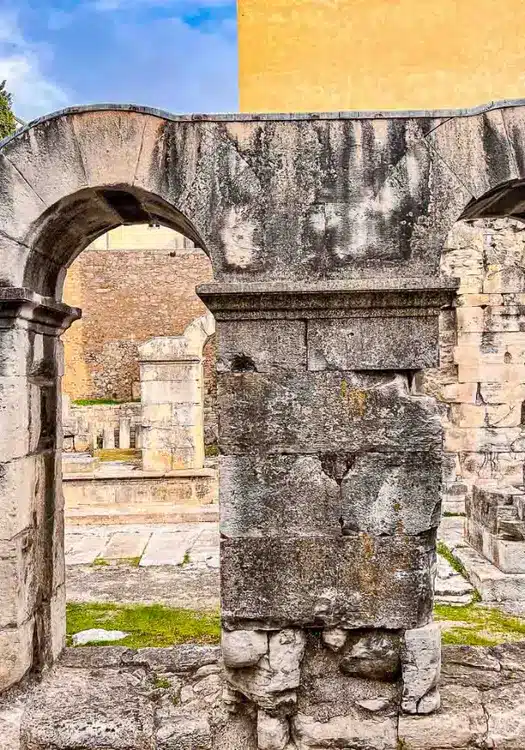
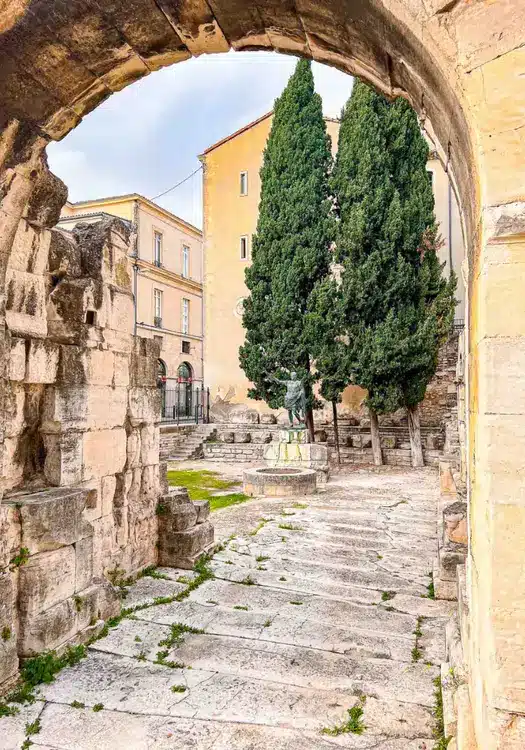
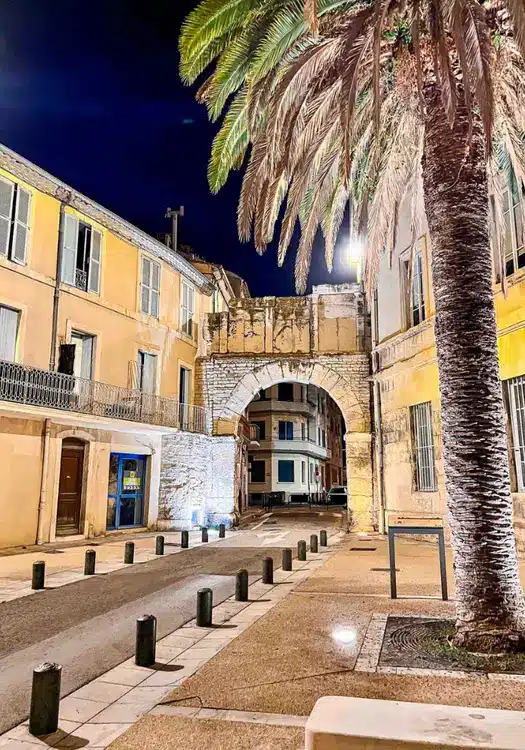
The Porte Auguste and Porte de France in Nîmes are both ancient gates that were once part of the city’s Roman defensive walls, but they serve different historical and architectural purposes.
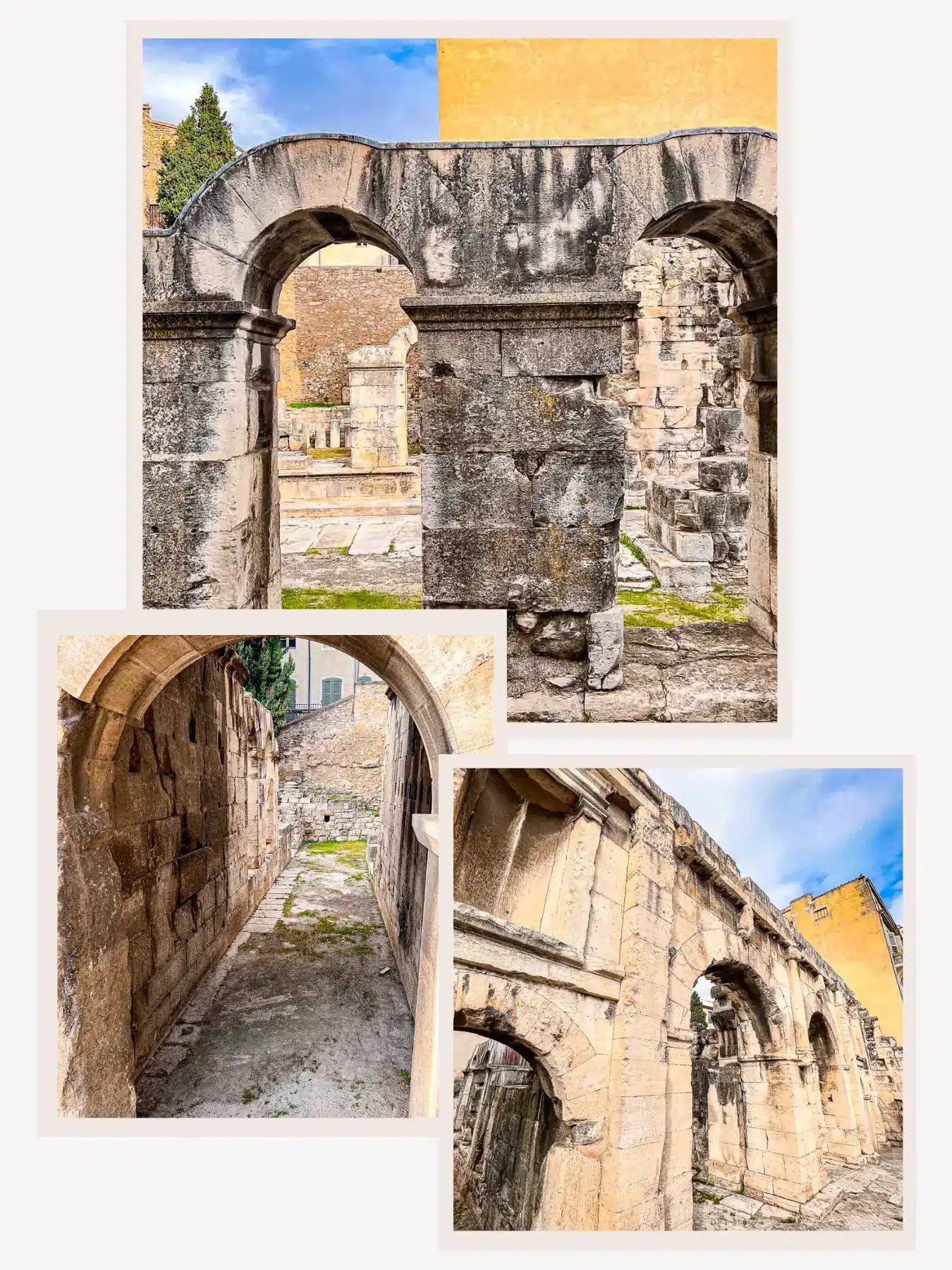
Historical Significance: The Porte Auguste, also known as the Augustus Gate, dates back to the 1st century BC and was named after the Roman Emperor Augustus. It was one of the primary entrances to the ancient Roman city of Nemausus (now Nîmes). This gate was crucial for welcoming travelers and dignitaries from the Via Domitia, the Roman road that connected Italy to Spain through southern Gaul.
Architectural Features: The Porte Auguste is notable for its large, arched gateways, flanked by two towers. It originally had four arches: two larger ones for vehicular traffic and two smaller ones for pedestrians. The gate is a prominent example of Roman engineering and architecture, reflecting the grandeur and strategic importance of Nîmes during the Roman era.
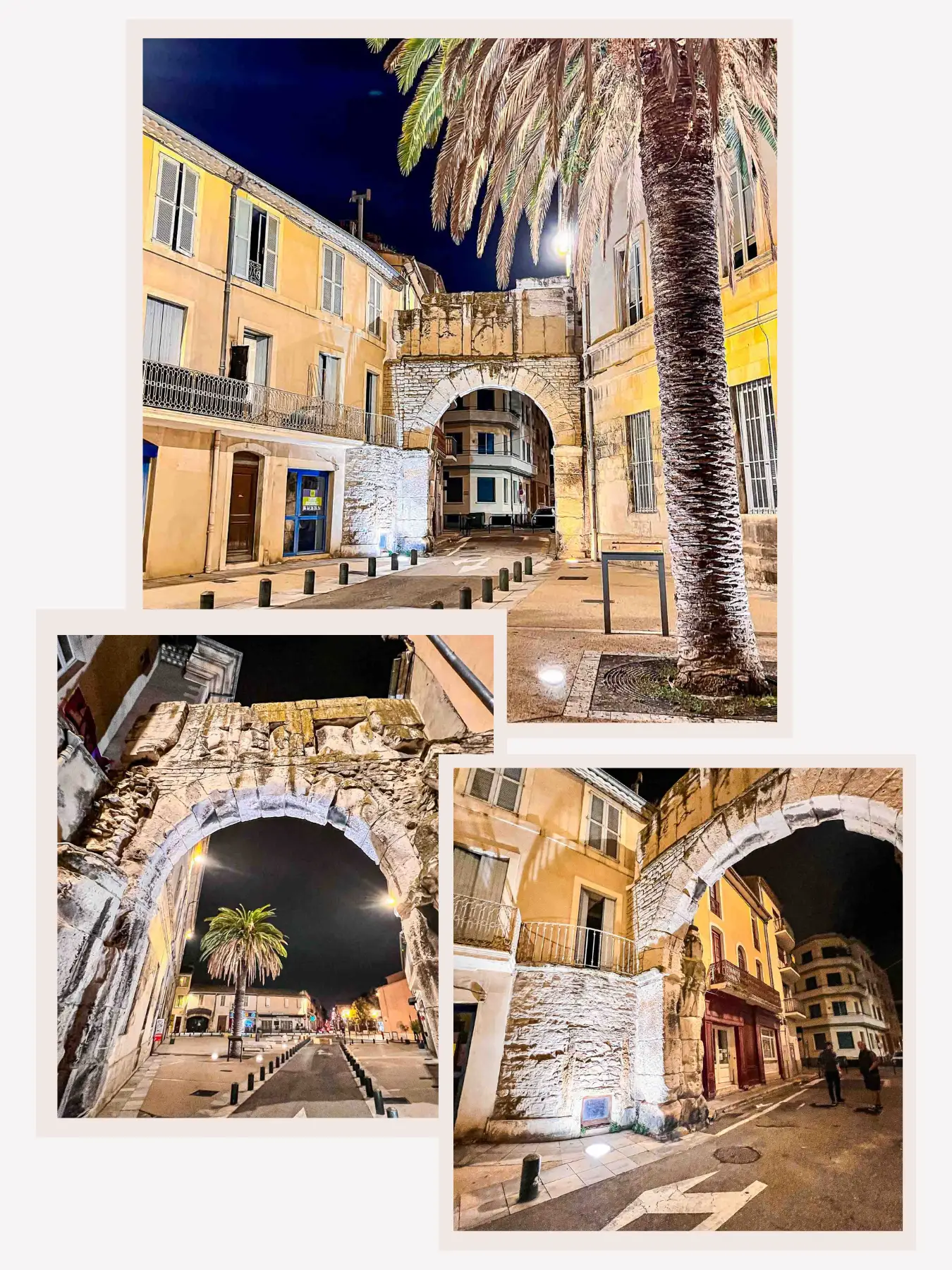
Historical Significance: The Porte de France, built in the 1st century AD, served as the southwestern gate of the Roman city. It was an important exit point for travelers heading towards the region now known as Spain, symbolizing Nîmes’ connection to the wider Roman Empire. The gate was part of the city’s fortifications and played a role in the defense and control of access to Nîmes.
Architectural Features: The Porte de France is smaller and less ornate than the Porte Auguste. It features a single arch and is more modest in its design, reflecting its role as a secondary gate rather than a grand entrance. Despite its simplicity, the Porte de France is an important historical structure, representing the practical side of Roman urban planning and military architecture.
While both gates served as entrances to the Roman city of Nîmes, the Porte Auguste was a more prominent and ceremonial gateway, reflecting the city’s grandeur and connection to the Roman Empire, while the Porte de France was a more functional gate, facilitating access and defense on the southwestern side of the city.
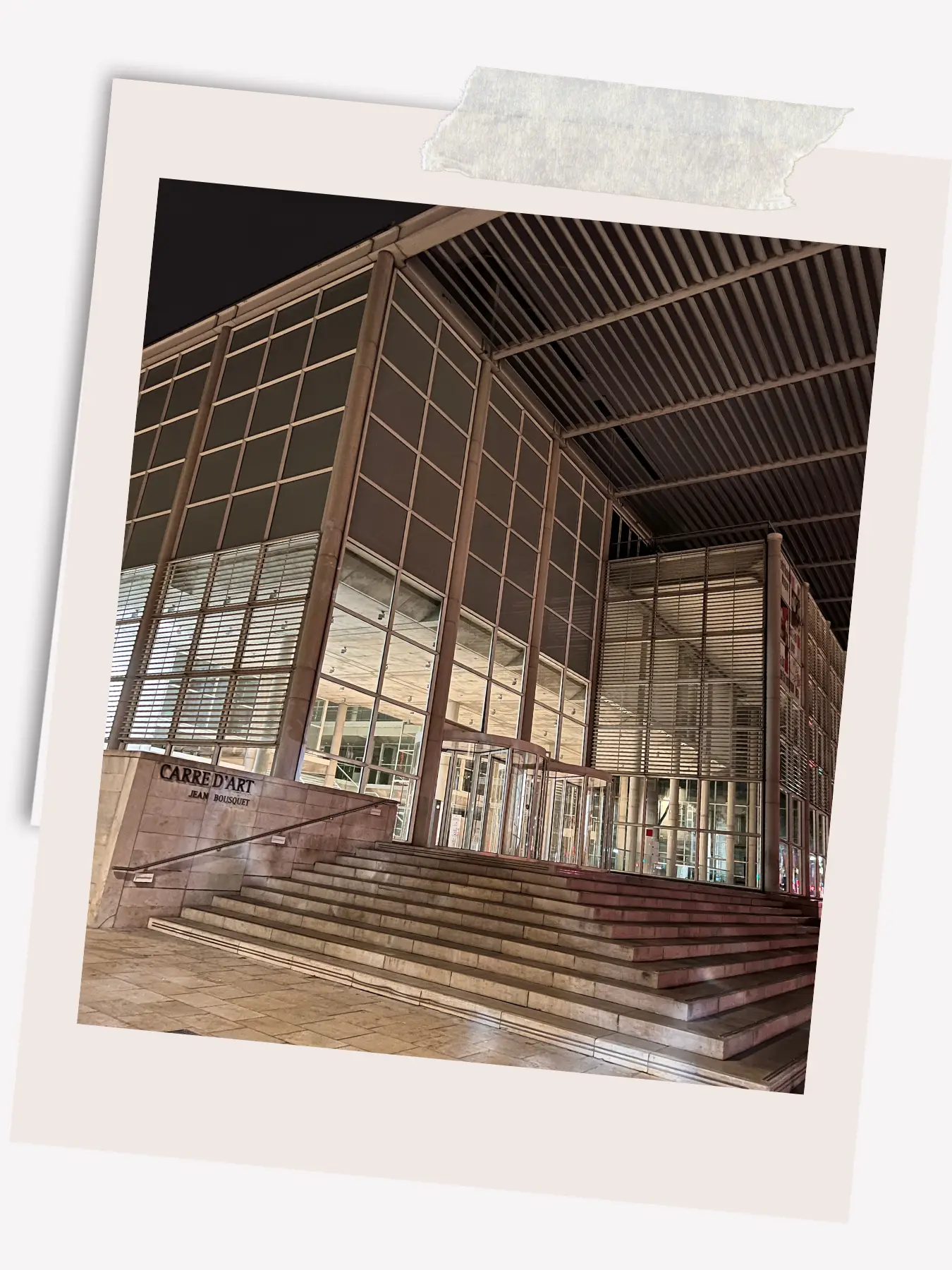 In the historic city of Nîmes, France, where ancient Roman monuments dominate the skyline, Carré d’Art offers a strikingly modern counterpoint. This contemporary art museum and cultural hub, designed by renowned architect Sir Norman Foster, opened in 1993, and houses an impressive collection of modern and contemporary art, showcasing works from the 1960s to the present day.
The building itself, with its sleek glass and steel facade, is a masterpiece of modern architecture, harmoniously coexisting with the adjacent Maison Carrée, an ancient Roman temple. Inside, visitors are treated to rotating exhibitions that highlight both emerging and established artists.
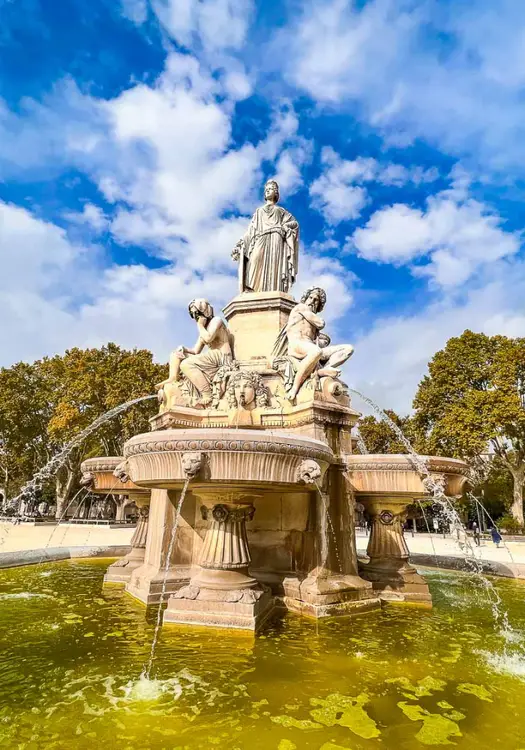
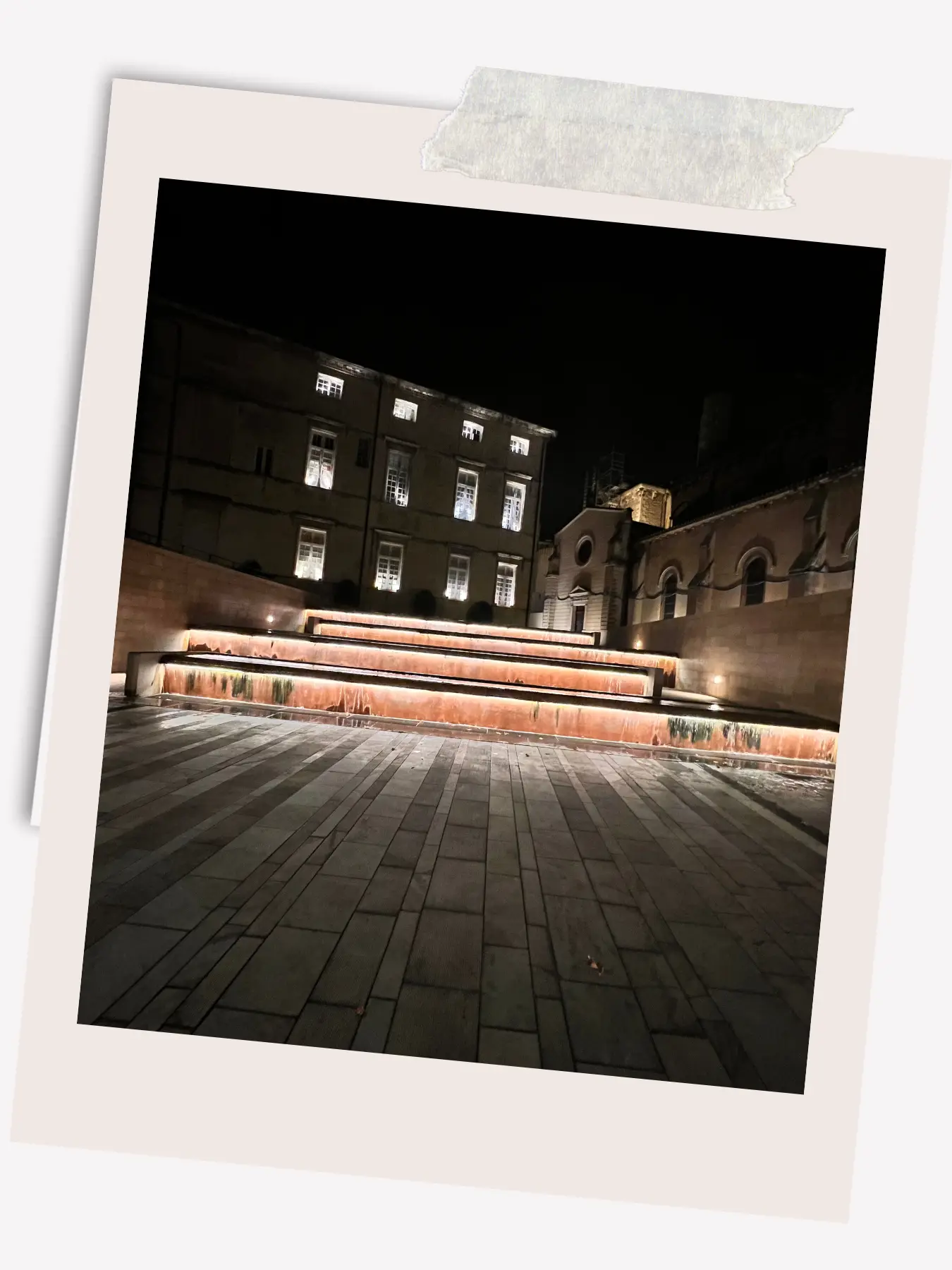 The Fontaine Pradier stands as an elegant symbol of the city’s artistic and cultural heritage. This stunning fountain, located in the bustling Esplanade Charles-de-Gaulle, was unveiled in 1851 and quickly became one of Nîmes’ most beloved landmarks. Designed by the renowned sculptor James Pradier, the fountain is a masterpiece of neoclassical art, featuring a central figure representing Nîmes, surrounded by allegorical statues symbolizing the city’s rivers.
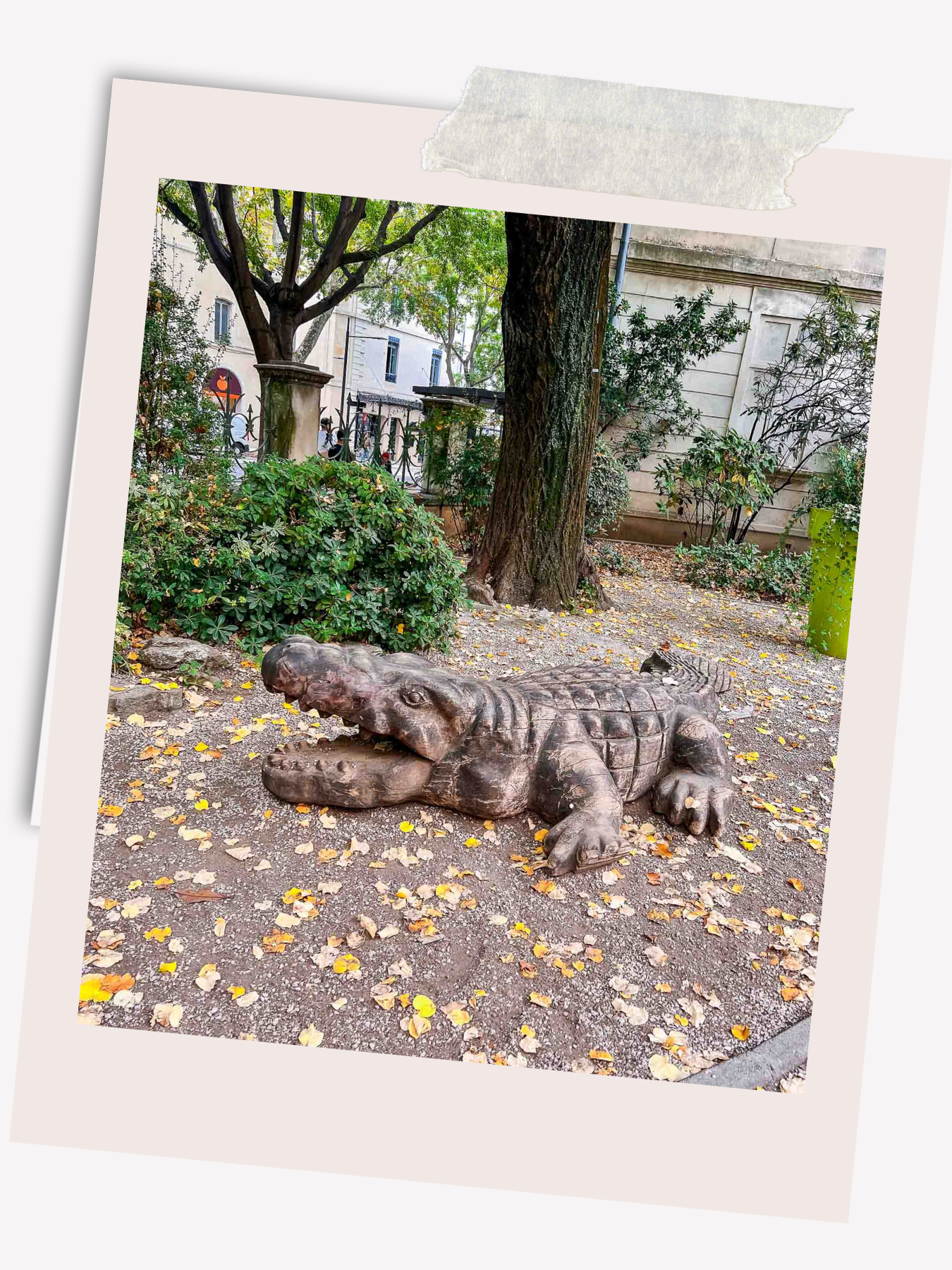
The Musée d’Histoire Naturelle is a treasure trove of natural wonders that offers a fascinating journey through the natural world. Established in the 19th century, this museum is one of the oldest of its kind in the region, boasting an extensive collection that spans the realms of zoology, paleontology, and ethnography.
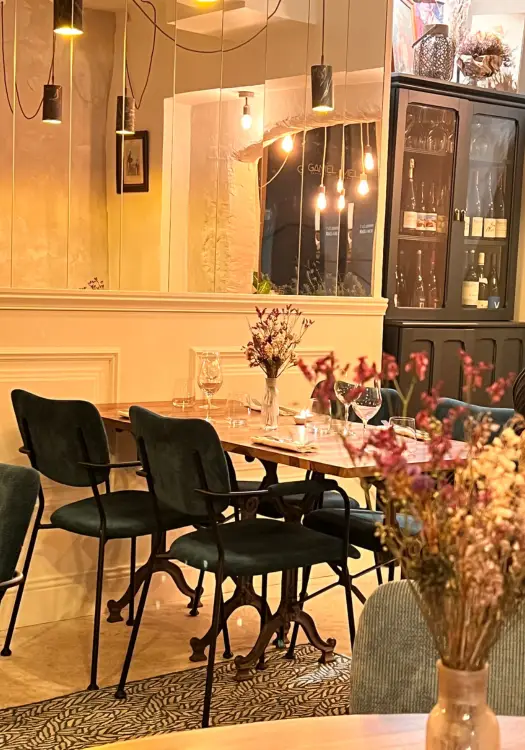
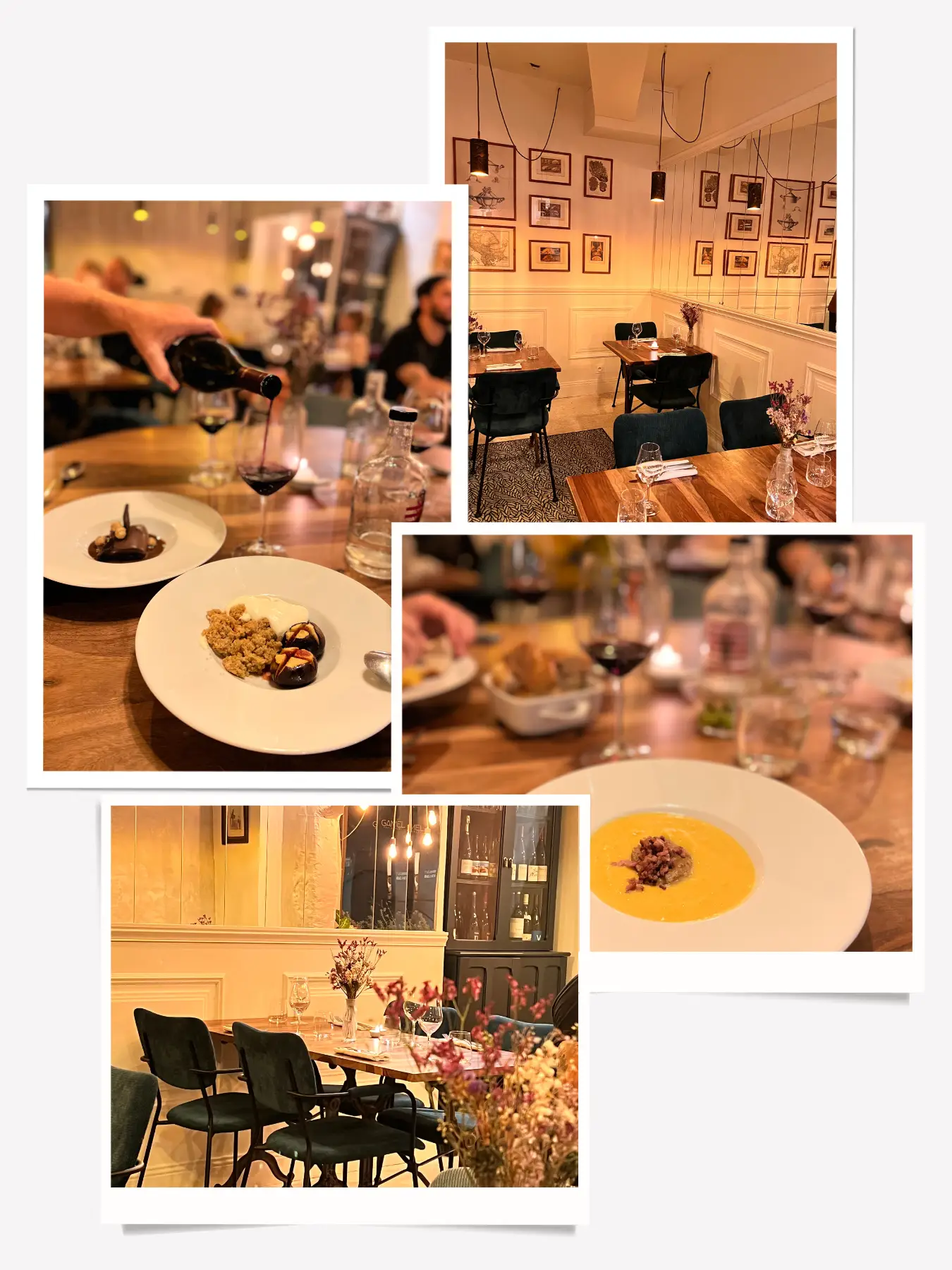 Nîmes, steeped in Roman history, is equally rich in culinary traditions, offering a delightful array of flavors that reflect its Provençal roots. From charming bistros nestled in ancient streets to bustling markets brimming with fresh produce, dining in Nîmes is a journey through the region’s gastronomic heritage. Expect to savor local specialties such as brandade de morue, a creamy cod dish, and petit pâté Nîmois, a savory pastry filled with pork. We dined at Les Magnolias and had one of the most spectacular meals in all of France!
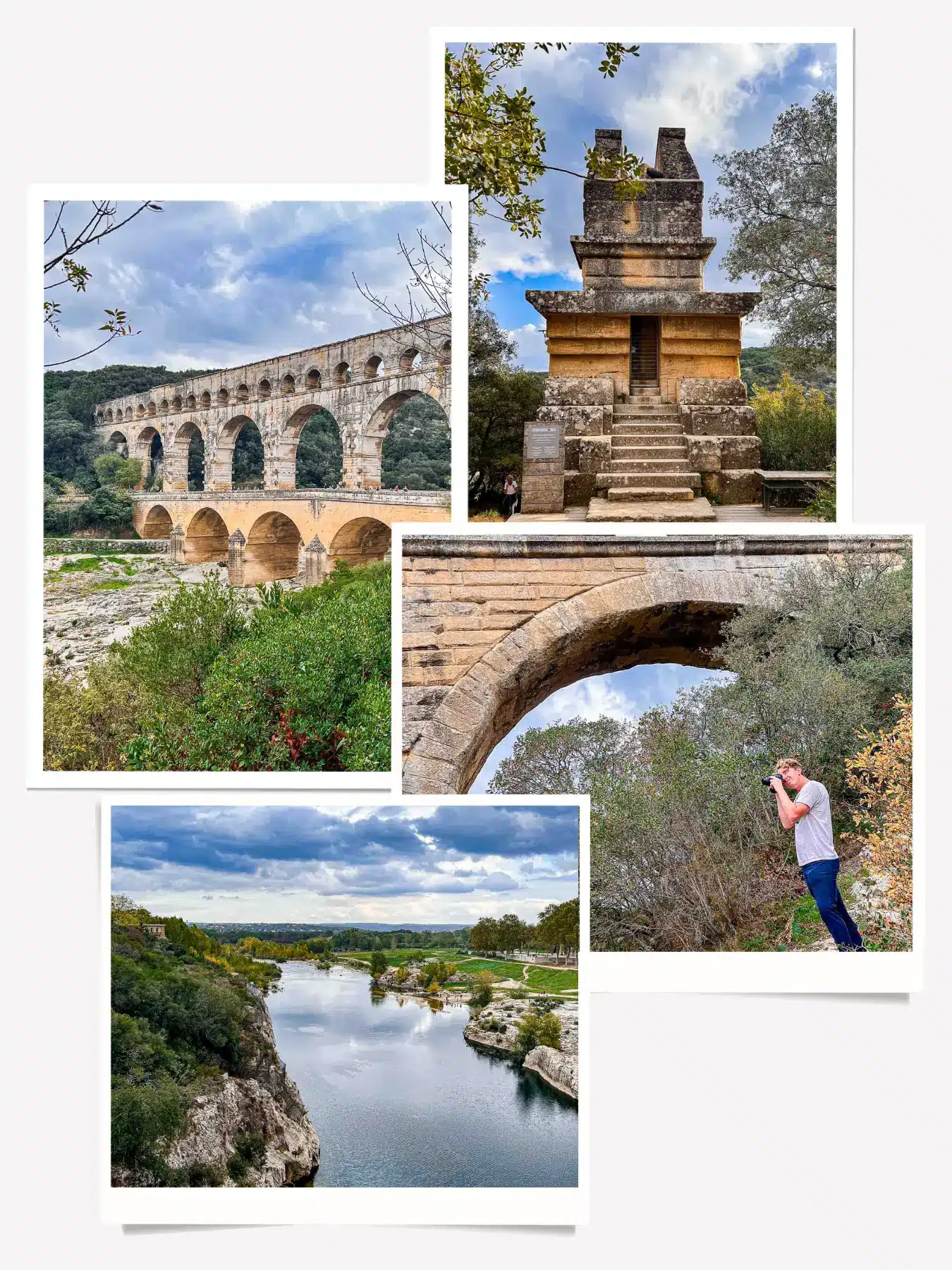
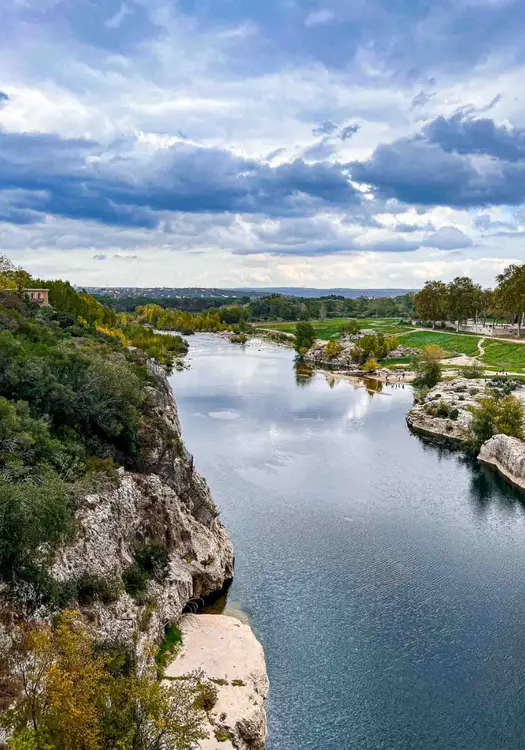
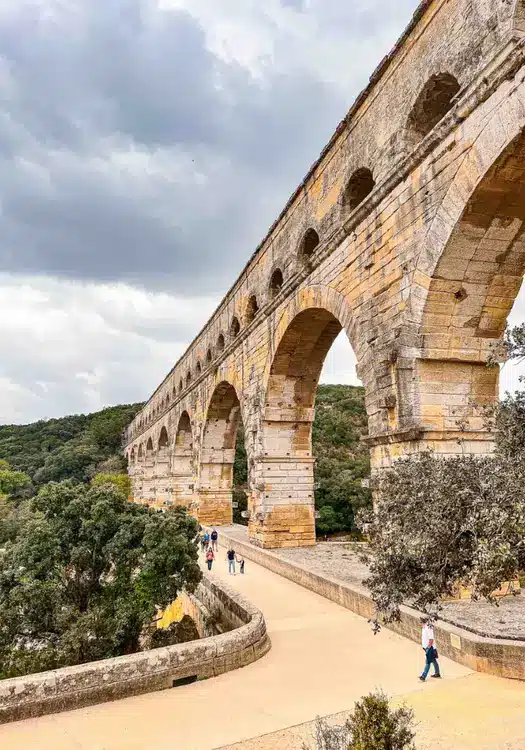
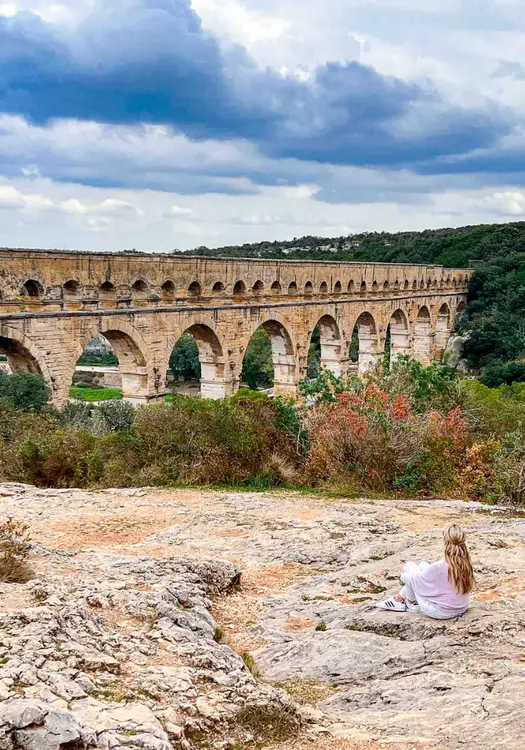
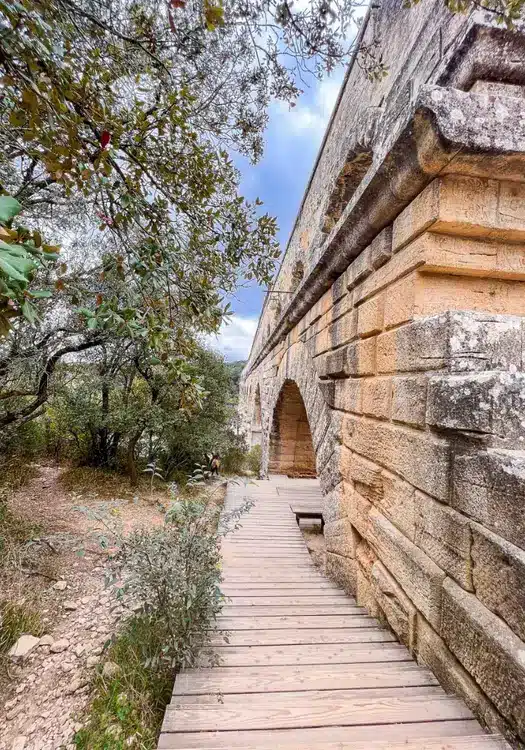
No visit to Nîmes would be complete without a trip to the Pont du Gard, one of the most impressive examples of Roman engineering in the world. Located about 12 miles (20 kilometers) from Nîmes, the Pont du Gard is an ancient Roman aqueduct that once supplied water to the city from a spring near Uzès.
The aqueduct, which was built in the 1st century CE, is a UNESCO World Heritage Site and one of the best-preserved Roman structures in existence. The Pont du Gard stands 160 feet (49 meters) high and spans the Gardon River with three tiers of arches, creating a breathtaking sight.
Visitors to the Pont du Gard can explore the site on foot, walking across the aqueduct and along the surrounding trails. The site also features a museum that provides insight into the construction and history of the aqueduct, as well as the daily life of the Romans who lived in the area. In the summer, the Pont du Gard is a popular spot for swimming and picnicking, making it a perfect day trip from Nîmes.
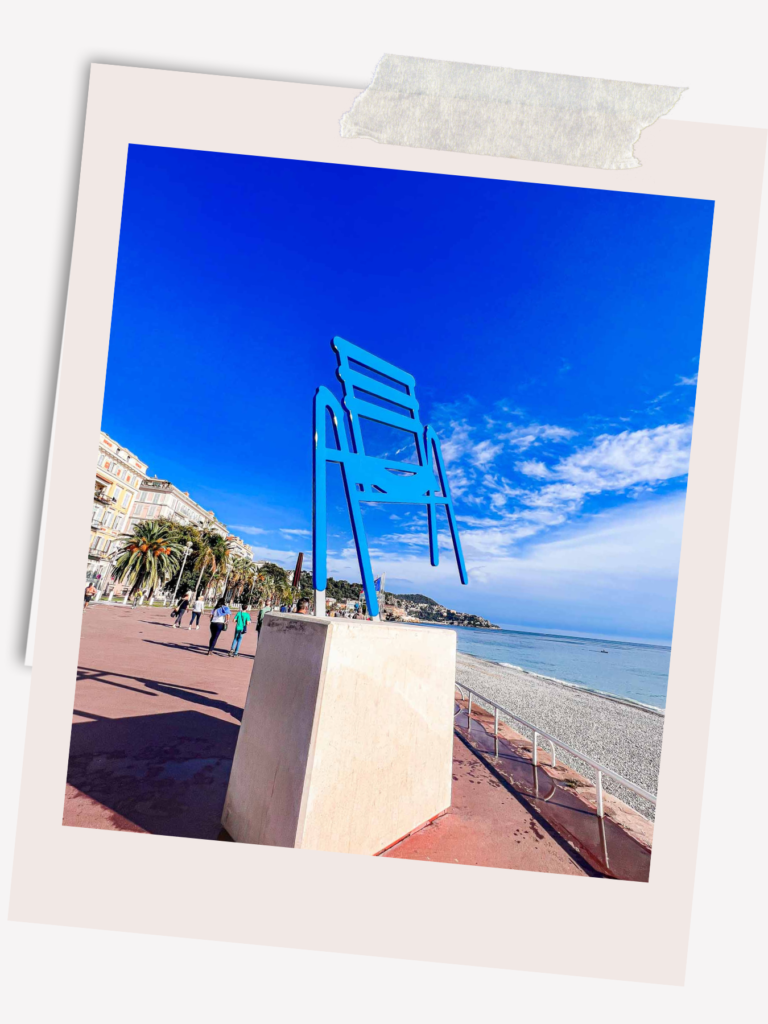
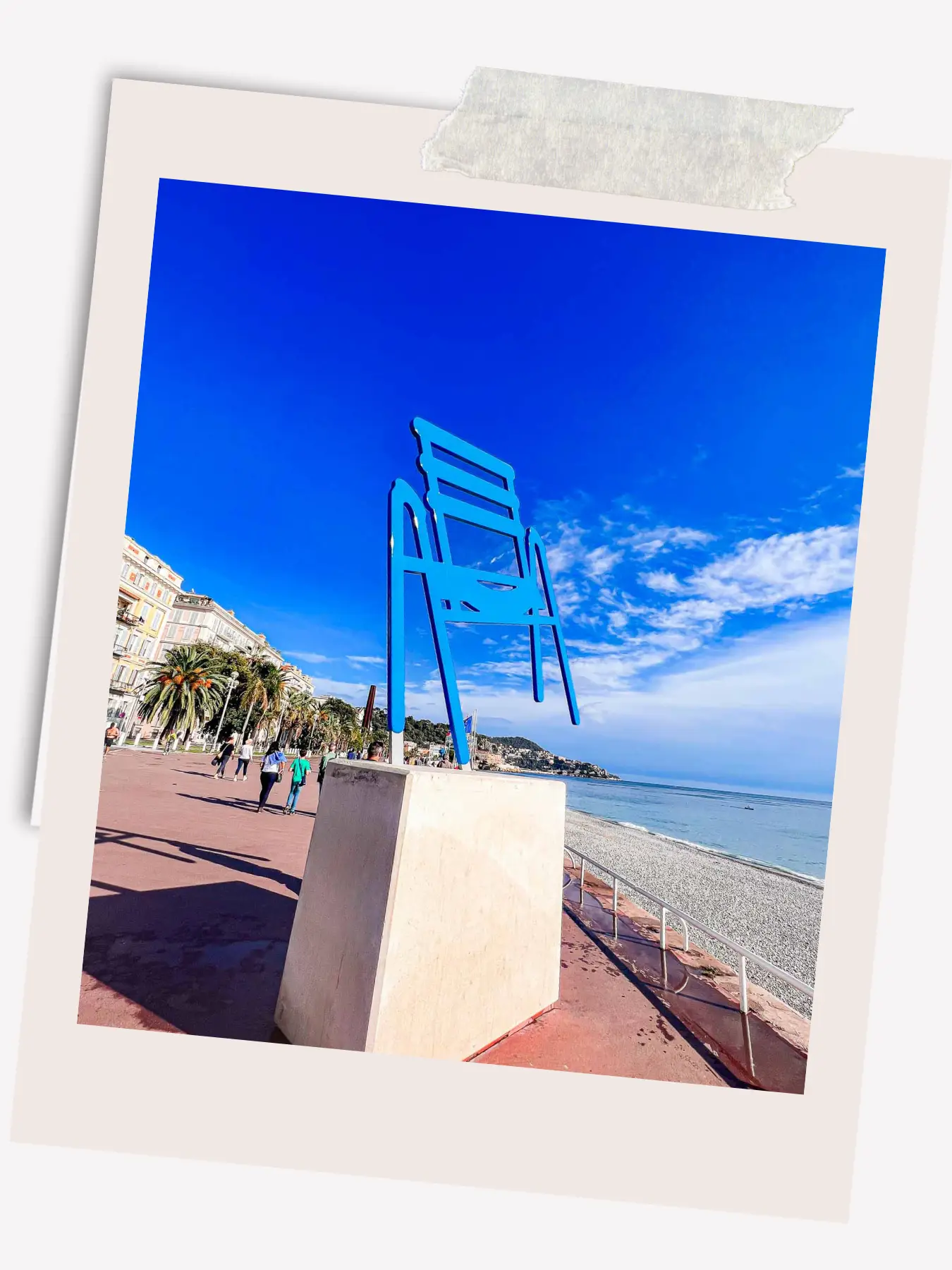 Nîmes, with its rich Roman history and stunning architecture, is a gateway to some of the most captivating destinations in southern Europe. Just a few hours away, the vibrant city of Barcelona offers an eclectic mix of modernist architecture, bustling markets, and lively beaches. Closer to Nîmes, the charming town of Narbonne invites visitors to explore its medieval streets, the impressive Narbonne Cathedral, and the peaceful Canal de la Robine. For those craving the allure of the French Riviera, the village of Èze provides a breathtaking escape. Perched high on a cliff, Èze offers panoramic views of the Mediterranean and narrow, winding streets filled with artisan shops and fragrant gardens. Further along the coast, Nice dazzles with its stunning Promenade des Anglais, vibrant Old Town, and world-class museums. Whether you’re looking to delve into the cultural richness of Barcelona, relax in the serene beauty of Narbonne, or soak in the glamour of the Riviera in Villefranche Sur Mer and Nice, these travel destinations provide the perfect complement to your exploration of Nîmes.








Things to do in historic Amboise, France — the royal château, Leonardo da Vinci’s final home at Clos Lucé, market shopping, and a Loire Valley wine tasting.

A first-hand travel guide to Château de Chenonceau — hours, tickets, the gallery over the Cher, and the women who shaped it, from real visits to the Loire Valley.

Planning a trip to the Loire Valley’s largest château? This Château de Chambord travel guide covers hours, tickets, what to see inside, and tips from real visits.

A first-person road trip itinerary from Paris through Normandy — Honfleur, the D-Day Beaches, and Mont Saint-Michel — ending in the Loire Valley, with driving times, where we stayed, and the rental car lesson we learned the hard way.

Discover 30 of the best things to do in Lille, France, from Old Lille and the Vieille Bourse to museums, markets, Flemish food, and easy day trips.

Visiting the Louvre Museum isn’t about seeing everything—it’s about seeing what matters most to you. This guide shows when to go, how to plan your route, avoid overwhelm, and experience the Louvre with intention, curiosity, and time to wander.

Discover the 4 best day trips from Paris, including the royal grandeur of Versailles, champagne tasting in Épernay, medieval charm in Strasbourg, and the fairytale castles of the Loire Valley. Each destination offers history, beauty, and unforgettable experiences just hours away.

Embark on a breathtaking road trip through Northern France, exploring Paris, Normandy’s beaches, charming Honfleur, the fairytale Mont Saint Michel, and the castle-filled Loire Valley. Discover history, beauty, and unforgettable moments on this scenic French adventure from city to coast.

Explore the grandeur of the Palace of Versailles, where opulent halls and sprawling gardens reveal the lavish lives of French royalty. Discover the history, beauty, and intrigue behind Marie Antoinette’s world in this unforgettable journey through one of France’s most iconic landmarks.

Discover 20 unforgettable things to do in Paris, from sipping champagne atop the Eiffel Tower to exploring Montmartre and hidden gems like the Crypte Archéologique. A first-person travel guide through the City of Light’s beauty, history, and soul.

Travel Narbonne, France, and discover the charm of this historic city in the heart of the Languedoc region. Explore ancient Roman ruins, stroll through vibrant markets, and enjoy the relaxed ambiance along the Canal de la Robine. Our guide reveals Narbonne’s rich history and cultural treasures.

This Château d’Amboise Travel Guide explores the spectacular royal residence rising above the Loire River. Discover Leonardo da Vinci’s tomb, magnificent rooms, historic towers, panoramic gardens and the essential details you need to plan your visit.

Plan an easy Loire Valley day trip from Paris by train and rental car, with exact timing for Château de Chenonceau, Amboise, lunch, and Tours.

Discover the best things to do with kids on a Paris family trip. Explore iconic landmarks like the Eiffel Tower, visit the magical Jardin d’Acclimatation, and enjoy a boat ride on the Seine. Our guide offers fun, family-friendly activities for an unforgettable Paris adventure.

Explore Épernay, France, and indulge in the world of Champagne. Explore the renowned Avenue de Champagne, tour prestigious cellars, and taste exquisite vintages. Our guide highlights the best Champagne experiences, uncovering the rich history and elegance that make Épernay a must-visit destination for wine lovers.

Things to do at the D-Day Beaches in Normandy: Utah Beach and its landing museum, the church at Sainte-Mère-Église where a paratrooper’s effigy still hangs from the steeple, the Richard Winters Leadership Monument, La Fière’s “Iron Mike,” and the German bunkers still standing along the dunes. A full guide with hours, addresses, and a rainy day we won’t forget.

A first-hand Loire Valley travel guide to Chenonceau, Chambord, and Amboise — where to stay, what to see, and lessons learned across two trips through France’s château country.
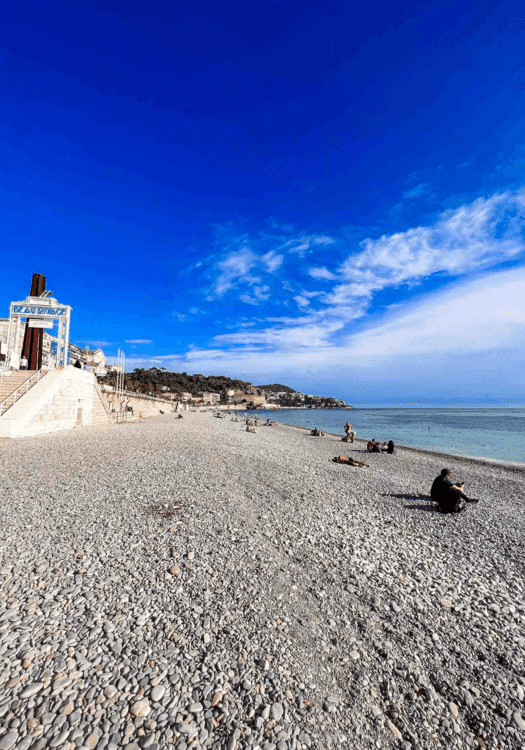
Travel the French Riviera and bask in the sun-soaked glamour of this Mediterranean paradise. Explore charming coastal towns, luxurious beaches, and vibrant markets. Our guide reveals the best of the Riviera’s chic resorts, stunning views, and the perfect blend of relaxation and elegance.