...
Loire valley travel guide banner featuring château de chenonceau reflected in the river cher

Loire Valley Travel Guide: Chenonceau, Chambord, and Amboise

Long tree-lined avenue leading to château de chenonceau in the loire valley, france
River cher and autumn trees viewed through a window at château de chenonceau in the loire valley

This Loire Valley travel guide begins where the Renaissance never quite ended — turrets over slow rivers, gardens clipped to a king’s whim, wine poured unhurried at dusk. We came for castles, stayed for the quiet between them. This is the valley I hope you find too.

Loire valley travel guide banner featuring the ornate central lantern at château de chambord in france
Facebook
WhatsApp
Pinterest
Email
Loire valley travel guide pinterest pin featuring the châteaux of chenonceau, amboise and chambord

Loire Valley Travel Guide Table of Contents


The Loire Valley At A Glance

RegionCentre-Val de Loire, France
Known forRenaissance châteaux, the Loire River, UNESCO-listed landscapes, and vineyards
Nearest hub citiesTours, considered the heart of the Loire Valley; Blois and Orléans are also convenient bases
From ParisApproximately 1½–2½ hours by car, depending on your destination, or about one hour by TGV to Tours or Saint-Pierre-des-Corps
Best time to visitLate April through June or September through October
Minimum time neededTwo full days for the principal highlights; four to five days to explore more deeply
Getting aroundA rental car is strongly recommended. Trains and local buses can work for a carefully planned day trip
UNESCO statusThe Loire Valley between Sully-sur-Loire and Chalonnes has been a UNESCO World Heritage Site since 2000
Signature experienceTouring a château at opening time, before the tour buses arrive


My 1600 x 100

The Loire Valley Travel Guide: Essential Tips for Planning the Perfect French Escape

Decorative graphic reading “welcome to loire valley”

A Short Introduction to the Loire Valley

The Loire Valley runs along France’s longest river, southwest of Paris, through a stretch of countryside so thoroughly rearranged by French kings that historians simply call it the Valley of Kings. Beginning in the 15th century, the French court moved its ambitions here in stone: hunting lodges swelled into palaces, fortified castles were softened into pleasure gardens, and an entire aristocracy spent a few centuries trying to out-build one another along the riverbanks. More than three hundred châteaux survive in various states of splendor and ruin. You will see three of the best-known in this guide — Chenonceau, Chambord, and Amboise — because those are the three I’ve walked myself, twice.

Popular Hotels When You Visit The Loire Valley

Where Is the Loire Valley, and What Makes It So Special?

Map of france showing the location of the loire valley in west-central france
The loire valley stretches across west-central france, with many of its best-known châteaux clustered around tours, amboise, blois and orléans.

Strung along its namesake river southwest of Paris, the Loire Valley occupies the heart of France — a region shaped less by tide and coastline than by kings, gardens, and five centuries of architectural one-upmanship. Its landscape of turreted châteaux, vineyard rows, and slow-moving water makes it a place that feels equal parts fairy tale and working countryside, often within the same afternoon.

•Renaissance châteaux, from the intimate to the outrageously grand

•Formal gardens designed to be walked, not just admired

•Da Vinci’s final years and resting place

•One of France’s great wine regions, Chenin Blanc and Cabernet Franc country

•A UNESCO World Heritage cultural landscape

•Riverside towns built for long, unhurried lunches

•Market towns still trading in the same produce that fed the French court

•Easy, well-marked road-trip distances between châteaux

•A natural add-on for anyone already routing through central France

•A single afternoon that can hold a hunting lodge, a moated bridge, and a glass of wine at dusk

My Loire Valley Route Map

There’s no single “correct” way through the Loire, but a Loire Valley travel guide built from two different trips can at least point you toward what worked. The first time, we drove in from Mont-Saint-Michel, aiming for Chambord and a hotel close enough to wake up beside it. The second time, we trained into Tours, rented a car there, and drove the same route of castles with a fraction of the stress. With either plan, the outcome was the same – beautiful!

Click here for directions to the Loire Valley on Google Maps and start planning your own route through château country.

Traveling Through The Loire Valley

Traveling through the loire valley on a winding country road surrounded by autumn trees
Driving through the loire valley became part of the experience, with quiet roads winding between forests, villages, vineyards and magnificent châteaux.

The Loire Valley is just as easy to move through as Normandy, particularly by car. Roads are wide and well marked, châteaux are rarely more than half an hour apart, and the driving itself — past vineyard rows, sunflower fields, and the river appearing and disappearing alongside the road — is part of the pleasure rather than an obstacle to it. Trains connect Paris to Tours efficiently on the TGV, but a car remains the best way to link Chenonceau, Chambord, and Amboise into one continuous route, with room for a wine-tasting detour whenever one presents itself.

Loire Valley Distances to Keep in Mind:

•Paris to Tours: about 2.5 hours by car, roughly 1 hour by TGV

•Paris to Amboise: about 2.5 hours by car

•Amboise to Château de Chenonceau: about 35 minutes

•Amboise to Château de Chambord: about 45 minutes to 1 hour

•Château de Chenonceau to Château de Chambord: about 1 hour

•Mont Saint-Michel to the Loire Valley: about 3–3.5 hours, making it a natural next leg for travelers continuing south from Normandy toward château country

Best Time to Visit The Loire Valley

Loire valley travel guide image featuring manicured château gardens in the best time to visit section
Late spring and early autumn are especially beautiful in the loire valley, when château gardens are colorful, temperatures are comfortable and the largest summer crowds are easier to avoid.

Late spring is the best window for a Loire Valley trip — the second half of April through June, when gardens hit full bloom and daylight stretches past nine at night, which matters when you’re trying to fit three châteaux and a proper lunch into one day. September and early October are the other sweet spot: the harvest is on, the crowds have thinned from their August peak, and the light across the river turns the kind of gold that makes every photo look accidental and good. July and August are workable but crowded and hot; winter has its own quiet appeal if what you want is empty rooms and bare gardens, but several châteaux run shorter hours and some rural hotels close entirely. Any season you choose, this Loire Valley travel guide holds up — just plan around the light.

MonthAverage HighWeather and Travel Experience in the Loire Valley
Jan–Feb45–47°FThe coldest months are chilly, damp and quiet. Some châteaux operate on reduced schedules, but low visitor numbers create a peaceful experience.
March54°FEarly blossoms and longer days signal the beginning of spring, although cool temperatures and rain remain common.
April60°FGardens begin blooming, the countryside turns green and visitor numbers remain manageable during the early shoulder season.
May65°FComfortable temperatures and colorful château gardens make May one of the loveliest months to visit, although passing showers are frequent.
June71°FWarm days, long evenings and gardens in full bloom create ideal sightseeing conditions before the busiest summer crowds arrive.
July76°FSummer brings warm weather, outdoor events and peak visitor numbers. Reserve popular châteaux and accommodations in advance.
Aug77°FTypically the warmest month, with busy attractions, occasional heat waves and some of the year’s highest accommodation prices.
Sept71°FPleasant temperatures, thinning crowds and the beginning of the grape

How Many Days Do You Need in The Loire Valley

This Loire Valley travel guide recommends two full days as the minimum to see Chenonceau, Chambord, and Amboise without racing — one day for Chambord alone, since it deserves the whole morning, and a second combining Chenonceau and Amboise, which sit close enough together to pair easily. Give yourself four or five days if you want room for wine, the smaller châteaux, and at least one afternoon where you don’t get in the car at all.

Art and Architecture in the Loire Valley

Art and architecture in the loire valley featuring an ornate renaissance fireplace, royal portrait and antique furnishings
Inside the loire valley’s châteaux, the details were just as captivating as the grand façades—from carved fireplaces and painted ceilings to royal portraits that preserve the personalities behind the history.

The châteaux themselves make the case better than any Loire Valley travel guide could — you can watch French architecture’s turn from medieval fortress to Italian-influenced Renaissance palace happen in real time, château by château. Amboise still has its defensive roots showing, while Chenonceau and Chambord lean fully into symmetry, ornament, and show. Leonardo da Vinci’s presence at the French court, based at Clos Lucé near Amboise, is often credited with accelerating that shift.

Popular Tours When You Visit The Loire Valley

Loire Valley's UNESCO World Heritage

Loire valley unesco world heritage landscape with historic stone arches, autumn fields and dramatic clouds
The loire valley’s unesco designation extends beyond its famous châteaux, recognizing an entire cultural landscape shaped by the river, historic towns, architecture and centuries of human settlement.

Renaissance architecture this dense doesn’t happen by accident, and neither did the recognition that followed: the stretch between Sully-sur-Loire and Chalonnes-sur-Loire was inscribed as a UNESCO World Heritage cultural landscape in 2000, honored for the concentration of château craftsmanship set within a landscape still farmed and worked today. It’s the kind of detail worth knowing before you build your own Loire Valley travel guide around it, because that UNESCO status shapes the region in ways you’ll notice on the ground:

•Protected, not preserved-in-amber. The land within the designated corridor is safeguarded from heavy development, but it’s still actively farmed and lived in — a working landscape, not a museum piece.

•Restoration over renovation. Châteaux and historic buildings within the zone are required to restore using traditional materials and techniques, which is part of why places like Chambord and Chenonceau still look the way they did centuries ago.

•The whole valley counts, not just the castles. UNESCO recognized the Loire for its architecture, its vineyards, and its farmland together — meaning the region’s identity is tied as much to what grows here as to what was built here.

•Funded by the visit itself. A portion of château admission fees goes directly toward the conservation work — roofs, gardens, stonework — that keeps this UNESCO-protected landscape standing for the next traveler’s Loire Valley travel guide too.

The Wines of the Loire Valley

Family and friends enjoying a loire valley wine and cheese tasting outdoors in amboise, france
My son, close friend and husband—three of my favorite travel muses—sharing a little cheese picnic and local wine pairing while we watched everyday life pass by in amboise.

If Bordeaux is about power and Burgundy is about place down to the individual plot, the Loire is about range — it’s the one French wine region that grows nearly everything, stretched across four sub-regions that follow the river from the Atlantic all the way to the edge of Burgundy. You can drink your way from crisp and mineral to rich and sweet without ever leaving the valley, and most of it pairs effortlessly with whatever you just ordered off a château-town lunch menu.

Pays Nantais, closest to the coast, is Muscadet country — bone-dry, briny white wine made from the Melon de Bourgogne grape, built specifically to drink with oysters and other things pulled straight from the Atlantic.

Anjou-Saumur, moving inland, is where Chenin Blanc and Cabernet Franc start to dominate. This is the region behind Savennières’ austere, age-worthy whites, the sparkling Crémant de Loire, the light red Saumur-Champigny, and the honeyed dessert wines of Coteaux du Layon — a region doing more stylistic range in one appellation than most countries manage entirely.

Touraine, the stretch around Amboise, Chenonceau, and Tours, is Chenin Blanc’s other great expression — Vouvray, made both still and sparkling, ranges from bone-dry to lusciously sweet depending on the vintage and the producer. Cabernet Franc reds from Chinon and Bourgueil round it out, structured and a little earthy, built for a long table and a longer dinner.

Centre Loire, furthest east, is Sauvignon Blanc’s home turf — Sancerre and Pouilly-Fumé are the two names that made Loire Sauvignon Blanc famous worldwide, crisp and flinty in a way that’s become the international benchmark for the grape. Sancerre also makes a lesser-known but excellent red and rosé from Pinot Noir.

A quick guide to what to order where:

•Muscadet (Pays Nantais) — dry, mineral white; pair with oysters or any seafood

•Chenin Blanc / Vouvray (Touraine) — ranges dry to sweet; ask before you order if you want a specific style

•Cabernet Franc / Chinon or Bourgueil (Touraine) — light-bodied, earthy red; excellent slightly chilled

•Sauvignon Blanc / Sancerre or Pouilly-Fumé (Centre Loire) — crisp and flinty; the region’s most internationally recognized style

•Crémant de Loire (Anjou-Saumur) — sparkling, traditional method; a reliable substitute for Champagne at a fraction of the price

•Coteaux du Layon (Anjou-Saumur) — sweet, honeyed dessert wine; worth a small pour at the end of a tasting

A tasting in Amboise, sitting more or less in the Touraine, is the natural place to start — but if the trip allows for it, driving even an hour in either direction changes the wine in your glass almost entirely.

The Food of the Loire Valley

Bowls of french onion soup served in a restaurant in france’s loire valley
A warm bowl of french onion soup topped with bubbling cheese was exactly what we wanted after a cold november day exploring the loire valley.

The Loire doesn’t get talked about as a food region the way Lyon or Provence does, and that’s a little unfair, because the valley has been feeding French royalty for five centuries and picked up some serious habits along the way. This is goat cheese country and river fish country, tarte Tatin country by origin, the kind of place where a market stall and a Michelin-starred kitchen are pulling from the same short list of exceptional local ingredients.

Start with the cheese. Sainte-Maure de Touraine — a log of ash-coated goat cheese with a single piece of rye straw running through the center, originally there to hold the shape together — is one of France’s great AOC cheeses, and it’s made right in the region you’re driving through. Crottin de Chavignol, smaller and firmer, comes from just east along the river near Sancerre. Either one, at room temperature, with a glass of the local Sauvignon Blanc, is more or less the platonic ideal of a Loire lunch.

Then there’s the river itself, which still shows up on menus more than most visitors expect. Sandre — pike-perch — is the fish to order here, usually served simply, with a butter sauce, because the fish doesn’t need help. Rillettes de Tours, a coarser, darker cousin of the more familiar rillettes de Tours you’ll find in Paris, turns up on nearly every bistro menu as a starter, spread thick on bread, no apology necessary.

And the tarte Tatin — the caramelized, upside-down apple tart found on dessert menus across France — was, by most accounts, invented by accident at a hotel in Lamotte-Beuvron, in the Loir-et-Cher, not far from Chambord. Ordering it here isn’t just dessert; it’s eating the dish more or less where it was born.

A few things worth seeking out on the ground:

•Sainte-Maure de Touraine or Crottin de Chavignol — local goat cheeses, best eaten simply, with bread and a glass of Sauvignon Blanc

•Sandre (pike-perch) — the signature Loire River fish, usually served with a beurre blanc sauce

•Rillettes — a rustic pork spread, standard on nearly every bistro starter menu in the region

•White asparagus — in season April through June, a Loire Valley specialty worth ordering while it’s fresh

•Tarte Tatin — the caramelized apple tart, credited to a hotel near Lamotte-Beuvron, close to Chambord

•Loire wine, obviously — Chenin Blanc and Cabernet Franc from Touraine and Anjou, Sauvignon Blanc from Sancerre and Pouilly-Fumé to the east

None of this requires a reservation or a plan. A market morning in Amboise, a bistro lunch between châteaux, a cheese plate at the end of a wine tasting — the food here tends to find you, the same way the castles do.

Where to Stay in the Loire Valley

Small loire valley boutique hotel covered in scaffolding and closed for renovations
We arrived at 11 p. M. To discover that our reserved hotel was closed for renovations. Expedia helped us find another room in town, but we learned an important lesson: always call a small boutique hotel directly to confirm your reservation before arriving.

The Loire doesn’t have one dominant style of lodging — it has several, and which one makes sense depends less on budget than on what kind of trip you’re after: chasing a specific château view, staying central enough to hit all three in a day, or splitting the difference somewhere in Tours.

•Château hotels. A handful of the region’s smaller châteaux have converted part or all of their properties into hotels, letting you actually sleep inside the kind of building most visitors only tour for an hour. These book up fast in peak season and tend to sit well outside town centers, so they suit travelers with a car and no fixed schedule more than anyone trying to hop between sights on foot.

•Boutique hotels with a château view. Smaller independent properties near Chambord, Chenonceau, and Amboise sometimes market themselves specifically on proximity — a room where the château is the view, not a drive away. We booked one of these outside Chambord on our first trip, arrived late in the evening, and found it closed for renovation — no one had answered our calls earlier that day to warn us. It was disappointing , but easy to fix. I had booked the room on Expedia and it was easy to find a chain hotel nearby with a room available that same night, and were checked in within the hour.I wish we had the experience, we didn’t and Expedia reversed the charges with little effort.

•Chain and mid-range hotels. Amboise, Blois, and Tours all have reliable chain options — not glamorous, but consistent, and a smart fallback if a smaller property falls through. Tours in particular has a good cluster of these near the train station, useful if you’re arriving without a car and picking one up locally.

•Bed and breakfasts (chambres d’hôtes). The Loire has a deep bench of family-run B&Bs, often in converted farmhouses or manor homes, usually with breakfast included and occasionally with a host who’s happy to point you toward a lesser-known vineyard or restaurant. These tend to be the best value-for-character option in the region.

Tours as a home base. Staying centrally in Tours, rather than closer to any single château, is a strong option if you’re relying on trains and rental cars rather than driving the whole route yourself — it puts Chenonceau, Amboise, and Chambord all within roughly 30 to 60 minutes, with the added benefit of a real city’s worth of restaurants at night.

My storied journeys logoHow This Journey Began For Me: The Loire Valley

The first time I saw the Loire Valley, it arrived as the final movement in a longer road trip with my husband — Paris, Honfleur, the D-Day beaches, Mont-Saint-Michel, and then this. The shift was almost startling: harbor towns and coastal cliffs giving way to a valley of turrets and golden stone, the kind of landscape fairy tales borrow from. We’d wanted all of France in one trip, and somehow the Loire felt like its reward — the place the journey had been building toward without our quite realizing it.

The second time, we came back to share it — my husband and I, eager to show off the region to our son and a close friend who’d never seen it. We moved through it differently this time, faster and lighter: trained into Tours, rented a car there, and drove to Chenonceau and Amboise. We closed the day with a long, unhurried wine tasting in Amboise and dinner in Tours before the train carried us back toward Paris. Watching someone else see Château Chenonceau for the first time — that particular hush when it appears past the trees — is its own kind of return visit. It’s the trip I’d recommend to almost anyone.

Through My Lens - Loire Valley

Things to See and Do in the Loire Valley

Château de Chenonceau: The Ladies' Château

Château de chenonceau overview featuring its river cher setting, historic entrance and richly decorated interior
Exploring château de chenonceau revealed far more than its famous river-spanning silhouette—we found elegant rooms, royal portraits and layers of history shaped by the remarkable women who lived here.

Chenonceau doesn’t sit near the river so much as stand in it — the château’s long gallery is built directly over an arched bridge spanning the Cher, so that from certain angles the whole building looks like it’s floating. I’d seen photographs before we went and assumed they were flattering the place; they weren’t. On our second visit, walking it again with our son and our friend, I watched both of them go quiet in almost the same spot on the bridge gallery, the long checkerboard-floored room with windows on both sides — the kind of quiet that means a photo isn’t going to do it justice and they know it.

History and Highlights:

•Built in stages from the early 1500s, with Diane de Poitiers commissioning the arched bridge over the Cher and Catherine de’ Medici later adding the two-story gallery on top of it

•Nicknamed le château des dames for the string of women — Diane de Poitiers, Catherine de’ Medici, Louise Dupin — who shaped its design and protected it through the centuries, including the French Revolution

•The formal gardens on either side of the château, laid out by Diane de Poitiers and Catherine de’ Medici respectively, are worth a slow lap before or after the interior

Practical Information:

•Website: chenonceau.com

•Hours vary by season, generally 9:00 or 9:30 a.m. to between 4:30 and 7:00 p.m. depending on time of year — check the official 2026 opening times before you go

•Location: 37150 Chenonceaux, about 35 km east of Tours

My 1600 x 100

Popular Tours When You Visit the Loire Valley

Château d'Amboise: Where the Renaissance Slept

Château royal d’amboise overview featuring the royal residence, vaulted interior and landscaped gardens
Exploring the château royal d’amboise took us through elegant royal rooms, beautifully maintained gardens and sweeping views over the loire valley—all within the château where leonardo da vinci was laid to rest.

Amboise is the château we returned to most, mostly because the town around it is so easy to like — a riverside walk, a hill of a castle, and, at the base of it, Leonardo da Vinci’s grave, which is a stranger thing to stand in front of than you’d expect. On our first trip, exhausted and displaced from our canceled hotel, we came back to Amboise for a full day and it did more to restore the mood of the trip than the hotel view ever would have. On the second trip, it’s where we ended: a long wine tasting as the light went low over the river, no château tickets left to use, nowhere else we needed to be.

History and Highlights:

•A royal residence since the 15th century, and the childhood home of King Charles VIII, who later invited Italian Renaissance architects and artisans to France after his campaigns in Italy — a turning point for French château design

•Leonardo da Vinci lived his final years at Clos Lucé, a short walk from the château, at the invitation of King Francis I, and is buried in the château’s Saint-Hubert Chapel

•The terraces offer some of the best river views in the entire valley, looking out over the Loire and the rooftops of Amboise below

Practical Information:

•Website: chateau-amboise.com

•Hours vary seasonally, roughly 9:00 a.m. to between 4:30 and 7:00 p.m. — confirm current opening hours before visiting

•Location: 37400 Amboise, on the south bank of the Loire

Château de Chambord

Château de chambord overview featuring me outside the château, its ornate rooftop and double-helix staircase
Standing in front of château de chambord, i was overwhelmed by its scale—but the closer details, from the intricate rooftop to the remarkable double-helix staircase, made it even more unforgettable.

I’ll be honest about my bias here: Chambord is the château I planned an entire evening around, and the one that let me down and made up for it in the same twelve hours. We never got the room with the view. What we got instead was an early morning drive back to the château from a chain hotel, a little sheepish, a little sleep-deprived — and then the building itself, which is genuinely too big to be believed from a photograph. Five hundred forty rooms, a roofline that looks like a small city of towers and chimneys, and a forest park around it larger than Paris itself. Whatever the hotel situation, Chambord did not care, and neither, in the end, did we.

History and Highlights:

•Built starting in 1519 for King Francis I, largely as a hunting lodge — an almost absurdly grand one, never fully finished as a residence

•The centerpiece is a double-helix open staircase, its design often attributed to Leonardo da Vinci’s influence, built so two people can ascend and descend without ever meeting

•The surrounding estate covers over 5,400 hectares, walled and gated, and is the largest enclosed forest park in Europe — walking, cycling, and boat rentals are all available on-site

Practical Information:

•Website: chambord.org

•Open every day of the year except January 1 and December 25; hours generally run 9:00 a.m. to between 5:00 and 6:00 p.m. depending on season — check current opening hours and rates, as ticket pricing changed in 2026

•Location: 41250 Chambord, about 45 minutes from Tours by car

Popular Tours When You Visit Château de Chambord

Journal Entry From The Loire Valley

We had it all planned to the hour. Castle tours, a wine tasting in Amboise, dinner in Tours before the last train back — the kind of tight, pretty itinerary you build when you're trying to show off a place you love to people you love. We arrived in Tours to pick up our rental car, feeling very organized about it, and walked up to the counter ready to go. Neither of us had our license. Not misplaced, not in the wrong bag — genuinely, both of them, sitting safely in the hotel room safe, several miles and one train ride behind us. We stood there for a second doing the math on how badly this was going to wreck the schedule. Chambord doesn't wait for you. Neither does a dinner reservation. Our son — along for the trip, not exactly a seasoned road warrior — quietly stepped up to the counter, license in hand, and rented the car himself. He drove us the entire day: castle to castle, into Amboise for wine, back to Tours for dinner, the two of us in the car, one in the back seat like a couple of tourists on a very well-run tour. Which, as it turned out, we were. It became the joke of the whole trip. Two adults, thoroughly outmaneuvered by their own passports sitting in a safe, saved by the one person in the car young enough to still remember which pocket he'd put his license in.
Circular photograph of château de chambord in the loire valley, france
Journal Entry 12
The Loire Valley

Sustainability in the Loire Valley

The Loire Valley isn’t just beautiful — it’s protected, and that protection shapes how the region grows. In 2000, UNESCO inscribed the stretch of the Loire between Sully-sur-Loire and Chalonnes-sur-Loire as a World Heritage cultural landscape, one of the few sites recognized not for a single monument but for an entire living region — château, vineyard, farmland, and river woven together as one continuous piece of heritage. That designation comes with real consequences: new construction is tightly regulated, agricultural land within the protected corridor is preserved rather than paved over, and the châteaux themselves are required to restore using traditional materials and techniques, which is part of why Chambord’s stonework and Chenonceau’s gardens still look the way they did centuries ago rather than getting a modern facelift.

That same UNESCO framework has pushed sustainability into the region’s tourism and agriculture in ways visitors can actually feel:

•Vineyards under environmental certification. A growing share of Loire Valley wine estates — particularly in Touraine and Anjou — farm organically or biodynamically, a shift accelerated by the valley’s UNESCO status and the pressure to protect the same land the designation was built to preserve.

•Slow, low-impact travel between châteaux. Cycling routes, including long stretches of the Loire à Vélo, run the length of the valley and connect many of the major châteaux directly, offering an alternative to driving for travelers who want to linger rather than rush.

•Restoration over replacement. The Domaine national de Chambord and the Château de Chenonceau both fund ongoing conservation work — roofline repairs, garden restoration, stonework — through visitor admission, which means the ticket price is doing more than granting entry; it’s underwriting the upkeep of a UNESCO-protected landscape.

•Working farmland left intact. Because the region was inscribed as an agricultural landscape and not just an architectural one, the vineyards, orchards, and market gardens between the châteaux remain in active use rather than being cleared for development — part of what keeps a drive through the valley feeling like the countryside and not a theme park.

None of this changes what a visit to the Loire Valley looks like day to day — the castles, the wine, the long lunches are all still there. But the UNESCO status is a big part of why they still are, and traveling through with that in mind, choosing a bike route over a highway, a certified vineyard for a tasting, is an easy way to support a landscape that was protected precisely so it wouldn’t stop looking like this.

My 1600 x 100

Facts About The Loire Valley

•It’s called the Garden of France, and it earns the title. The mild climate and fertile soil along the river made this region the food and wine basket of the French crown for centuries — vineyards, orchards, and market gardens still cover much of the land between the châteaux.

•Leonardo da Vinci spent his last years — and is buried — here. Invited to France by King Francis I in 1516, Leonardo lived at Clos Lucé, a short walk from the Château d’Amboise, until his death in 1519. His remains are interred in the château’s Saint-Hubert Chapel.

•Chambord’s central staircase is a double helix. Two spirals wind around a single axis so that people climbing one never cross paths with people descending the other — a design widely credited to Leonardo’s influence on the château’s architects, though no signed drawing proves he built it himself.

•Chenonceau was largely designed and defended by women. Diane de Poitiers commissioned the arched bridge over the River Cher; Catherine de’ Medici later built the gallery on top of it. The château is still nicknamed le château des dames — the ladies’ château.

•The entire valley is a UNESCO World Heritage cultural landscape. It was inscribed in 2000 not for any single monument but for the whole 280-kilometer stretch — château, vineyard, village, and river together, recognized as a living record of Renaissance ideas about architecture and land.

My 1600 x 100

FAQs About The Loire Valley

1. Is the Loire Valley worth visiting if I've already seen Paris?

Yes — it's a different register of French history entirely, less about the Republic and more about the monarchy that came before it, and it's close enough to Paris that it doesn't require a separate trip to reach.

2. Can you visit the Loire Valley as a day trip from Paris?

You can, and it's a reasonable option if your time is limited — a train to Tours or Blois plus a rental car or organized tour can get you to one or two châteaux in a day. We have a separate day-trip guide for exactly that version of the trip; this guide is built for people staying in the region for at least a night or two.

3. Do you need a car in the Loire Valley?

Strongly recommended. Trains connect Paris to Tours easily, but the châteaux themselves are spread across the countryside with limited public transit between them — both of our trips relied on a rental car once we arrived in the region.

4. Which Loire Valley château should I prioritize if I only have time for one?

Chambord for sheer scale and architectural ambition; Chenonceau if you want the more intimate, garden-and-river experience. We've never regretted visiting either.

5. How many châteaux are there in the Loire Valley?

More than three hundred survive across the region in varying states of preservation, though only a few dozen are regularly open to visitors. This guide covers the three we've personally visited: Chenonceau, Amboise, and Chambord.

6. What should I book in advance for a Loire Valley trip?

Château entry tickets, especially at Chenonceau and Chambord in peak season, and your hotel — confirmed by more than one phone call, ideally with a backup in mind. We learned that one the hard way.

Lola zoch walking through the black-and-white tiled grand gallery at château de chenonceau in france’s loire valley.
Planning a château escape from paris? My loire valley day-trip itinerary shows how to visit chenonceau and amboise by train and rental car—without turning the day into a race.

Explore The Loire Valley

French Destinations

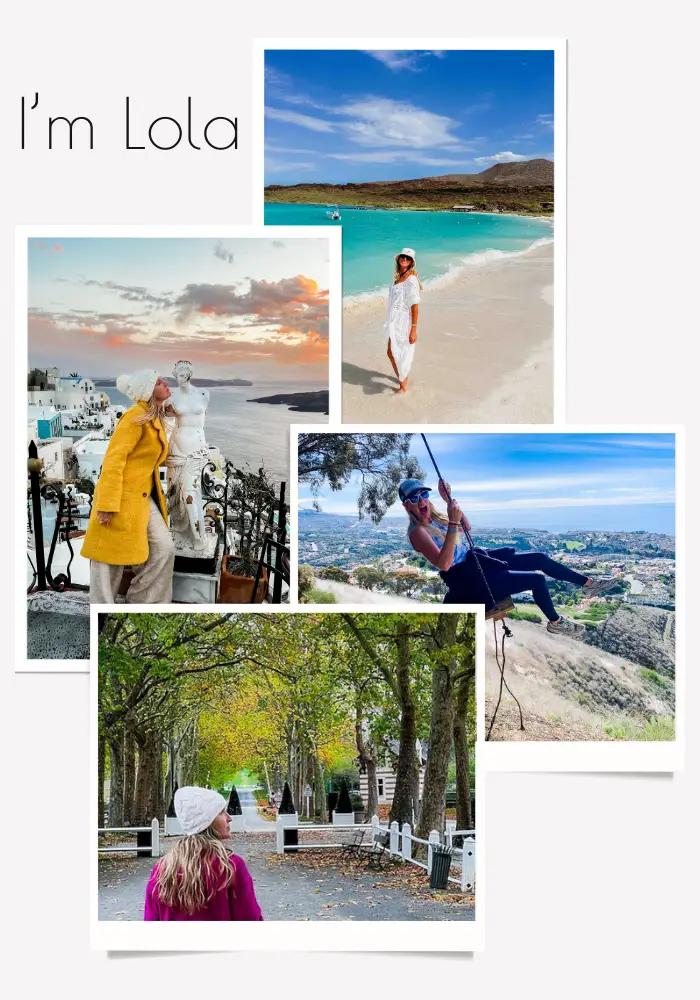
Collage of the author from my storied journeys on the beach, in santorini on a cliff, swinging on a swing and walking through a castle at the loire valley.

Wherever I go and with every picture I take, I see a story. So every journey, becomes a storied journey.

About My Guides

I don’t travel with endless days to wander (maybe someday) — I travel with intention. Every city has a story, and I plan around what matters most, so I leave inspired (and never regretful). In my guides, I share it all: what I loved, what I researched, and what you might choose for your own journey. Think of them as a compass, not a script—so you can create your chapter in that city’s story.

Explore Europe

My 1600 x 100

Journey Product Essentials

Some of the links on this page are affiliate links, which means I may earn a commission if you make a purchase—at no extra cost to you. Thank you for supporting My Storied Journeys!

Tips for Traveling in The Loire Valley

Essential TipWhat to Know
Rent a carRegional trains connect Tours, Blois and other major towns, but a car gives you the freedom to reach rural châteaux, vineyards and villages without building your day around limited connections.
Choose a central baseTours, Amboise and Blois all make convenient bases. Amboise is especially atmospheric and well positioned for visiting Chenonceau, Chambord and the smaller châteaux nearby.
Limit yourself to two châteaux a dayChâteau interiors, gardens and estates take longer to explore than expected. Two well-paced visits leave time for lunch, photographs and an unplanned stop without turning the day into a race.
Reserve major châteaux in advancePurchase timed tickets for Chenonceau, Chambord and other popular estates during summer, weekends and holidays. Château passes may also be available through the Tours and Blois tourism offices.
Arrive at opening timeThe first hour of the day is usually the quietest. You will encounter fewer tour groups, find easier parking and have a better chance of photographing the château grounds without large crowds.
Check seasonal hoursOpening times, last-entry hours and guided tours change throughout the year. Smaller châteaux may close on certain weekdays or operate reduced schedules during winter.
Allow time for the gardensThe gardens at Chenonceau, Villandry, Chambord and other estates are not an afterthought. Wear comfortable shoes and leave enough time to explore beyond the château interiors.
Book wine tastings aheadThe Loire Valley produces Chenin Blanc, Sauvignon Blanc, Cabernet Franc and sparkling Crémant de Loire. Many smaller wineries welcome visitors by appointment rather than maintaining regular walk-in hours.
Pack layers and rain protectionWeather can change quickly, especially during spring and autumn. Bring a lightweight waterproof jacket and shoes that can handle gravel paths, damp gardens and uneven stone floors.
Plan meals around French dining hoursRestaurants in smaller towns may stop serving lunch by early afternoon and reopen for dinner later in the evening. Reserve special meals and keep a picnic option available on château-heavy days.

Discover Your Next French Adventure

Explore Posts About The Loire Valley

Day trips from paris

4 Best Day Trips from Paris You Can’t Miss

Discover the 4 best day trips from Paris, including the royal grandeur of Versailles, champagne tasting in Épernay, medieval charm in Strasbourg, and the fairytale castles of the Loire Valley. Each destination offers history, beauty, and unforgettable experiences just hours away.

Read More »

Subscribe to My Newsletter

Subscribe to my weekly newsletter. I don’t send any spam email ever!